Introduction
Behind every well-attended event is a simple chain. Someone learns about it, understands what it offers and signs up. If any link in that chain is weak, interested people drop away. The date may be hard to find, the ticket options may be confusing or the registration steps may take too long. Organizers feel the same pressure from the other direction, because publishing an event, answering questions and tracking sign-ups all take time.
MyEventNow is an online platform built to strengthen every link in that chain. It combines event discovery, ticket booking and organizer tools in one marketplace. This article describes its main services, the kinds of events it supports and the practical ways attendees and organizers can use them.
An Overview of What MyEventNow Is
MyEventNow is an online platform for event discovery, ticket booking and event management. It brings event organizers, businesses, communities and attendees into one shared marketplace.
Visitors can look through local and upcoming events, read the information given for each and then register or purchase tickets. The range includes concerts, comedy shows, festivals, workshops, exhibitions, conferences, seminars, webinars, theatre productions and community gatherings.
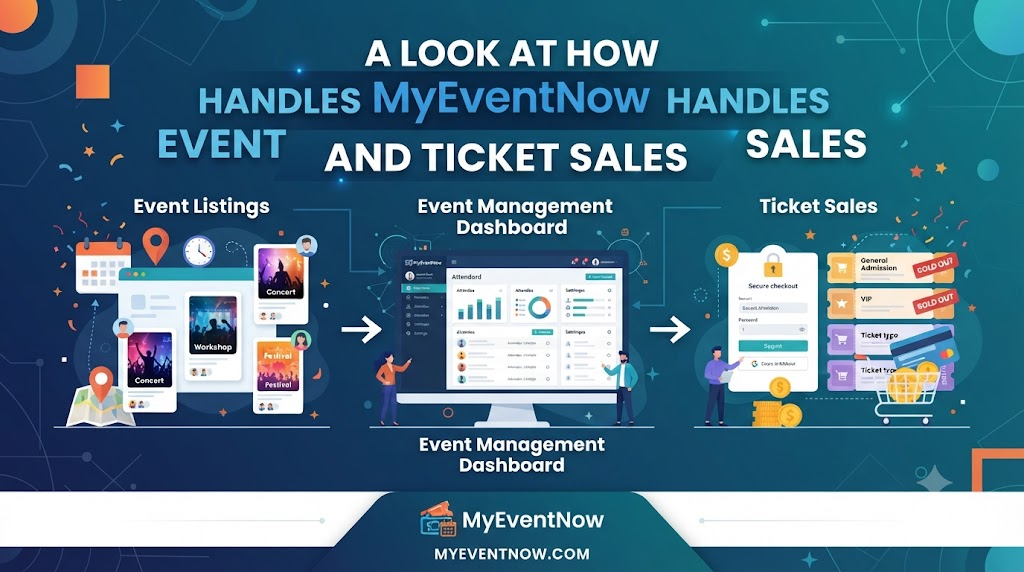
Organizers are given tools of their own. They can create event listings, configure ticket options, publish schedules, manage registrations, organize attendee information, monitor bookings and review performance. These tools are presented through centralized dashboards.
The two functions are designed to work together. A listing written by an organizer becomes the page that visitors read, and the registrations that visitors complete become the records that organizers manage.
The Case for Easier Event Discovery and Booking
People are usually willing to attend an event if the effort is reasonable. The difficulty often lies in finding and confirming the details.
Several everyday cases show this. A person new to a city may want to know which events are held nearby. Two friends may want to compare a festival with a theatre performance before choosing. A professional may be looking for a conference that suits their field. A parent may need an activity that works for the whole family. When everything is available in one place, these people can read, compare and decide without opening several different sources.
Online event ticket booking supports this process by letting someone act on their decision right away. Reading and reserving take place in the same environment.
Organizers have a matching need. They want their event to be understood quickly by the right people. A clear listing that sets out the schedule, venue and ticket choices helps visitors decide, and it lowers the number of separate questions an organizer must answer.
A Detailed Look at the Features and Services of MyEventNow
Each of the sections below covers one part of the platform and describes how people can use it.
Searching for Activities Around Your Location
Someone typing Events Near Me into a search box is generally after a practical answer: what is happening close to where I am? MyEventNow lets visitors browse concerts, workshops, festivals, theatre performances, exhibitions and community gatherings.
Practical answers depend on clear pages. Where the event is held, when it takes place and what it involves are the three facts most visitors want first. Browsing by category also suits people who want a certain kind of outing but have no specific event in mind. The platform description does not mention particular filters or automatic location detection, so none are described here.
Seeing What Is Planned in Major Indian Cities
Some events call for advance planning. A festival, a conference or a popular performance may be worth marking on a calendar well beforehand. With MyEventNow, visitors can look at Upcoming Events in India across cities such as Mumbai, Delhi, Bengaluru, Hyderabad, Pune, Chennai, Kolkata and Ahmedabad.
The audience is wide. Local residents can see what their own city has planned. Students may find workshops close to campus. Working professionals who travel may spot a session that fits their trip. Families can book activities early enough to coordinate everyone’s time.
What appears depends on what organizers have listed, so the available categories change from place to place. The platform is the best source for the current picture.
Reserving Places at Concerts and Music Festivals
Music events vary greatly. Some are large festivals, some are cultural evenings and others are performances by individual artists. Visitors who want Concert Tickets Online can use MyEventNow to see which music events are listed and read about them.
A useful habit is to scan the page for three things before booking. The venue shows how far you will travel. The schedule shows when to arrive. The ticket options show what you can choose. This takes a minute and prevents most of the confusion that spoils an evening.
For people attending a live show for the first time, a clear page also removes uncertainty about what the event involves.
Selecting Comedy Performances and Live Entertainment
Live entertainment extends beyond music. Stand-up comedy, theatre productions and other performances attract their own audiences, and visitors looking for Comedy Show Tickets can browse such events on the platform.
A short set of questions can help. What type of performance is it? Does the date suit everyone going? Is the venue convenient? Is the description clear enough to set expectations? Groups that work through these points together usually reach a decision more easily.
The Journey From Event Page to Booked Ticket
For an attendee, the path has four parts: find an event, read its details, pick a ticket or registration option and complete the booking in the way the platform provides.
Each part works best when information is visible and easy to read. Ticket details should be understandable, and event details should be available before anyone commits. As discovery and booking share one marketplace, the attendee does not have to find an event in one place and look for a booking method in another.
This article does not describe payment methods, refund rules, digital wallets, entry methods or cancellation terms. Those should be checked on the platform itself.
Creating Listings and Ticket Setups for Organizers
For those hosting events, MyEventNow functions as an Event Ticketing Platform. Organizers can create a professional listing, add relevant information, configure ticket options, publish the schedule and share the listing to help promote the event.
Many kinds of hosts can use it. Independent organizers can present a small class or show. Businesses can list a seminar or customer event. Educational institutions can announce lectures and fairs. Agencies can manage listings for clients, and community groups can invite local residents to take part.
A shareable listing gives organizers one page to circulate. The response depends on the event and on how well the organizer spreads the word.
Central Dashboards for Event Administration
After publication, practical work begins. Registrations must be tracked, ticket sales watched, attendee details kept in order and schedules checked. This is where Event Management Software plays its part.
As the platform describes it, organizers can coordinate registrations, manage ticket sales, organize attendee information, maintain schedules and review performance reports through centralized dashboards.
The practical gain is simplicity. Instead of keeping separate lists in separate places, organizers can read the status of an event from one location. Automated processes and advanced reporting are not assumed beyond what the description says.
Sign-Up Workflows for Training, Conferences and Professional Gatherings
Not all events are held for entertainment. Many exist for learning, training or professional contact. An Event Registration Platform can support conferences, seminars, workshops, training programs, webinars, business events and networking meetups.
Registration gives organizers a list of participants and the details they need for planning, such as room capacity, materials and timings.
Different groups may rely on it in different ways. A college might register students for a skills workshop. A company might sign up clients for a product briefing. A training institute might record who has joined a new batch. In each case, a single organized list is easier to manage than scattered messages.
Getting Your Activity Listed for the Public
Organizers often work with small teams and limited time. The option to List Your Event Online offers independent hosts, agencies, businesses, educational institutions and community groups a straightforward way to make their plans public.
A listing is most useful when it is accurate. It should explain what the event is, state the date and venue and describe the ticket details. Missing information makes readers hesitate.
Shareable listings can help organizers introduce events to interested audiences, but no platform can promise a particular reach or number of registrations. A listing works best as one element of a wider effort to inform people.
Ticket Publishing, Booking Oversight and Availability Control
Organizers who want to Sell Event Tickets Online need to present ticket information clearly and watch how bookings progress. MyEventNow lets them publish ticket details, manage event availability, monitor bookings and promote events through shareable listings.
Keeping details current matters. When a start time shifts or a ticket option changes, the listing should be revised promptly. Old information creates confusion for attendees and extra messages for organizers. Fees, payout schedules and ticket limits are outside the scope of this article and should be confirmed with the platform.
A Short Guide to Using MyEventNow
Attendees
- Visit the platform and look through the events listed.
- Search by place or category.
- Read the description, schedule and other details provided.
- Choose the ticket or registration option you prefer.
- Complete the booking or registration in the way the platform provides.
Organizers
Begin by gathering your event information, including the description, date, venue and ticket details. Create the listing, configure ticket options and publish the event. Then use the management tools to follow registrations and bookings. Screen names and buttons may differ, so follow what the platform shows.
Frequent Errors When Booking or Running Events
Attendees often stumble through haste. Booking without confirming the date and venue can produce a plan that does not work. Skipping the description may hide details about format or timing. Choosing an event type that does not match personal interests, only because it was listed first, often leads to disappointment.
Organizers have their own hazards. Listings with gaps leave readers guessing. Ticket descriptions that are unclear prompt questions that could have been avoided. A schedule that is not updated after a change creates confusion on the day, and registration records that are not reviewed make preparation harder.
A little care on each side prevents most of these problems and leads to a better experience for everyone.
A Hypothetical Walkthrough: A Community Festival Evening
Suppose a residents’ welfare association plans a festival evening for its neighborhood, with music, food stalls and children’s activities. The committee writes a short description, confirms the date and the community ground and sets the timings. They create a listing with these details, add a ticket option for entry and publish the event. The link to the listing is shared in neighborhood groups.
A family from a nearby area, searching for a weekend outing, finds the festival. They read the description, check that the timings suit their evening and see that the ground is close to home. The details are clear, so they select a ticket option and complete their booking.
On the committee’s side, the bookings begin to appear. One member reviews the attendee information, keeps track of how many entries have been booked and updates the listing when the opening time changes. By the day of the festival, the committee has a good sense of the crowd to expect.
Answers to Common Questions About MyEventNow
In simple words, what does MyEventNow do?
It lets people find events and book tickets, and it gives organizers the tools to publish and manage events.
Does it only list entertainment events?
No. It also covers workshops, conferences, seminars, webinars, exhibitions and community gatherings.
How can an attendee choose between similar events?
By reading the description, schedule, venue and ticket options on each event page.
What can an organizer do before an event begins?
Create a listing, add event information, configure ticket options and publish the schedule.
What can an organizer do once bookings start?
Monitor bookings, manage registrations and keep attendee information organized.
Is there a way to see how an event performed?
Yes. Organizers can review performance reports through centralized dashboards.
Can a college or training institute use it for registrations?
Yes. Educational institutions and training providers can use registration tools for their workshops and programs.
Are the cities named here the only places events can appear?
The platform description names these cities. What you see in any location depends on the events organizers have published.
To Conclude
Visitors to MyEventNow can look through concerts, comedy shows, workshops, festivals and community programs in one marketplace, read the details of each and book a place without leaving the page. The same information that helps them decide also helps organizers prepare, since the listing is shared by both sides.
Organizers, for their part, can publish an event, set up its tickets and follow registrations, bookings and schedules from centralized dashboards. When the chain from discovery to sign-up works smoothly, attendees arrive better informed and organizers know more clearly whom to expect.