Introduction
Projects rarely fail because people do not want to work hard. They fail because people do not know what is happening.
One team member thinks a design is final, while another thinks it is still a rough draft. A manager asks for an update, but the person who has the answer is offline. Different departments use different tools that do not talk to each other, creating walls of data that nobody can see through.
This mix-up of tools and messages creates project confusion. It wastes hours in unnecessary meetings, causes duplicate work, and frustrates everyone involved.
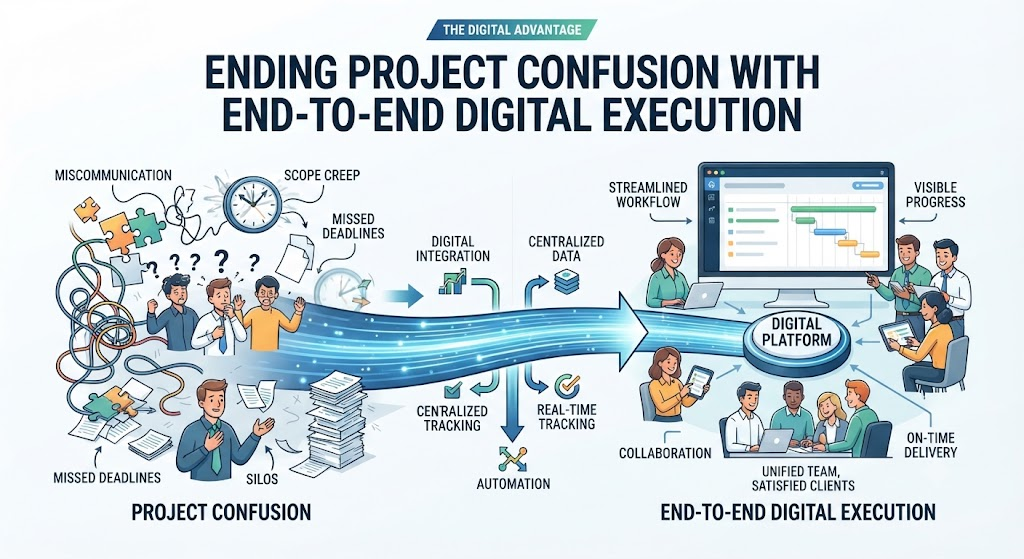
End-to-end digital execution fixes this problem. By connecting every part of a project into one digital workflow, teams can see what needs to happen, who is doing it, and when it is due. This article explains how digital execution works, why it matters, and how it stops project confusion before it starts.
What Is End-to-End Digital Execution?
End-to-end digital execution is the practice of running an entire project through connected software tools from the initial idea to the final delivery.
To understand it, think of a traditional restaurant kitchen. If the waiter writes orders on paper, shouts them to the chef, forgets to tell the chef about a food allergy, and leaves the receipt on a messy counter, mistakes will happen. Food gets delayed, and customers get angry.
Now, imagine a digital kitchen display system. When a customer orders, the item pops up on a screen in front of the chef. The moment the chef finishes the meal, the screen updates for the waiter. Everyone sees the same information in real-time.
In business, end-to-end digital execution does the same thing. It connects planning, task assignment, file sharing, approvals, and final delivery into one clear path.
How End-to-End Digital Execution Works
A digital execution system usually follows a clear lifecycle. Instead of jumping between random tools, the project moves through distinct, connected stages:
- Planning and Scope Definition: The project goals, timelines, and budgets are entered into a shared digital workspace.
- Task Breakdown: Large goals are split into smaller tasks, assigned to specific people, and given clear deadlines.
- Execution and Collaboration: Team members work on their tasks, upload files directly to the task cards, and leave comments in one place rather than in separate email threads.
- Review and Approval: Once a task is done, it moves to a review stage where managers can approve or request changes with a single click.
- Delivery and Archiving: The completed work is delivered, and the project data is saved for future reference.
Each step feeds directly into the next. There is no guesswork about who holds the baton.
Why Project Confusion Happens
Before looking at how digital execution solves problems, it helps to understand what causes project confusion in the first place.
- Siloed Communication: Information gets trapped in private emails, direct messages, or phone calls that other team members cannot see.
- Outdated Documents: People work on old versions of files because the newest version was sent as an attachment instead of being updated in a central hub.
- Unclear Ownership: Two people think the other person is handling a critical task, so nobody does it.
- Manual Handoffs: When one department finishes their part, they have to manually email the next department, leading to long delays and lost messages.
How End-to-End Digital Execution Reduces Confusion
Digital execution removes these roadblocks by changing how teams share information.
1. It Creates a Single Source of Truth
When everyone looks at the same dashboard, opinions matter less than facts. If a deadline changes, it changes for everyone at the same time. Team members no longer need to ask, “What is the latest status of this task?” They can simply open the dashboard and see it instantly.
2. It Clarifies Ownership and Accountability
In a good digital execution platform, every task has one clear owner. While many people can help, only one person is responsible for finishing it. This stops the “diffusion of responsibility,” where everyone assumes someone else is taking care of a job.
3. It Automates Handoffs
Instead of relying on an email notification to signal that a task is ready, digital systems can automatically trigger the next step. Once a writer marks an article as “Ready for Review,” the system instantly assigns it to an editor. This keeps projects moving without human bottlenecks.
Practical Example: Launching a New Product Feature
Imagine a software company launching a new button on their website.
- The Old Way (High Confusion): The product manager emails the designer. The designer sends a PDF of the mockup via chat. The developer builds the button based on the PDF, but misses a note sent in a separate email. The marketing team finds out about the button only after it goes live, so they have no ads ready. Everyone blames each other for the messy launch.
- The New Way (Digital Execution): The project lives in a shared digital workspace. The product manager creates a task card for the feature. The designer attaches the mockup directly to the card. The developer leaves a comment asking a technical question, which the manager answers right there in the thread. When the developer finishes, the card automatically moves to marketing, who already watched the progress and prepared the campaign.
The project flows smoothly because the digital system connects every department from start to finish.
Common Mistakes When Moving to Digital Execution
Switching to digital execution can sometimes cause its own confusion if not done carefully. Watch out for these common missteps:
- Using Too Many Tools: Buying five different apps that do not connect makes confusion worse. Aim for an integrated toolset.
- Forgetting to Train the Team: Giving people new software without explaining how to use it leads to resistance and old habits.
- Over-complicating Workflows: Making digital workflows with dozens of unnecessary approval steps slows down work instead of speeding it up.
Decision Framework: Is Your Team Ready for End-to-End Digital Execution?
Not every team needs a massive digital overhaul right away. Use these steps to check if you need it:
- Check Your Communication: Do team members regularly ask for updates that should already be obvious?
- Track File Versions: Do people waste time searching for the correct file on local computers or email threads?
- Measure Bottlenecks: Do projects stall out during handoffs between departments?
- Assess Growth: Is your team growing to a size where casual, face-to-face updates no longer work?
If you answered yes to most of these questions, moving to an end-to-end digital execution model is the right choice.
Key Terms
- Dashboard: A visual display of project data, tasks, and progress updates in one place.
- Single Source of Truth: A centralized collection of data where everyone accesses the most accurate and up-to-date information.
- Workflow: The sequence of steps that a project moves through from start to finish.
- Siloed Data: Information that is trapped within one department or tool and cannot be easily seen by others.
- Automation: Setting up software to perform repetitive tasks or trigger notifications without manual effort.
FAQs
What is the main benefit of end-to-end digital execution?
The biggest benefit is clarity. Everyone on the team knows what needs to be done, who is doing it, and when it is due, which stops miscommunication and delays.
Do small teams need digital execution tools?
Even small teams benefit. While small groups can communicate easily, digital execution tools save time, keep files organized, and help the business grow without extra chaos.
Is digital execution the same as project management?
Project management is the broader strategy of planning and leading a project. Digital execution is the practical application of using connected software tools to carry out that strategy day-to-day.
How do I get my team to adopt new digital tools?
Start simple. Introduce one central tool, show the team how it saves them time, and provide clear training before expecting full compliance.
Conclusion
Project confusion is expensive. It drains time, creates stress, and hurts the quality of the final work.
By moving to end-to-end digital execution, organizations replace messy communication and scattered files with a clear, connected workflow. When everyone shares a single source of truth, teams spend less time arguing about status and more time actually getting things done.