
Introduction
What is Certified DevOps Engineer (CDE)?
The Certified DevOps Engineer (CDE) is an advanced certification program that validates an individual’s expertise in orchestrating the modern software lifecycle. It is the bridge between traditional development and systems engineering. A CDE-certified professional isn’t just someone who writes code; they are the architects who design the automated “factory” where that code is built, tested, and shipped.
Why It Matters in a Cloud-Native World
We are currently in a landscape where “Software is eating the world.” Companies no longer have months to release a feature; they have hours. If your delivery process is manual, your company will lose to a competitor that is automated. The CDE skillset provides the Continuous Delivery capabilities that allow businesses to innovate at the speed of the market. It is the core requirement for any organization operating in the cloud.
The Strategic Edge for Engineers and Leadership
For an engineer, the CDE is a signal of high technical maturity. It proves you can handle the most complex parts of the stack. For leadership, hiring CDE-certified talent is a Risk Management strategy. It ensures that the people managing the production environment are following a standardized, audited, and globally recognized methodology.
2. The DevOps Technical Domain (The Stack)
| Domain | Legacy Approach | CDE (Automated) Approach |
| Infrastructure | Manual Server Config | Infrastructure as Code (Terraform) |
| Environments | “Works on my machine” | Containerization (Docker) |
| Orchestration | Static Server Clusters | Elastic Management (Kubernetes) |
| Delivery | Scheduled Deployments | Continuous Integration (CI/CD) |
| Official Link | Register Here | [Official Certification Details] |
Provider: devopsschool.com
3. Deep-Dive: Mastering the Pillars of Automation
The Foundation: Architecture and Automation
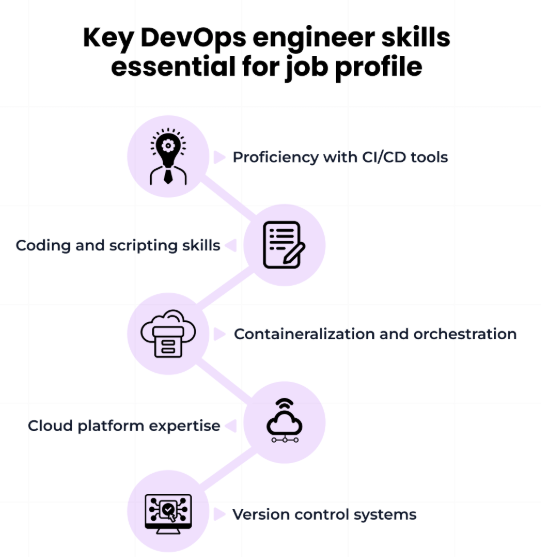
The CDE program is built to give you total control over the production environment. It starts with mastering Version Control (Git), ensuring that every change in your system is tracked and reversible. From there, you move into Containerization, which allows you to package software so it runs identically on any server in the world, eliminating the common “dependency hell” that causes production failures.
The Core: Orchestration and Self-Healing Systems
The real career leap happens when you master Kubernetes and Infrastructure as Code (IaC). These technologies allow you to manage thousands of servers using simple code files. Instead of manually configuring one server at a time, you write the “blueprint” once and deploy it everywhere. This ability to create “Self-Healing” systems—where the infrastructure automatically fixes itself if it fails—is why CDE professionals are the highest-paid individuals in the engineering market.
Real-World Architectural Projects
- Zero-Downtime Pipelines: Building systems where you can update a live app without a single user noticing.
- Auto-Scaling Clusters: Designing infrastructure that grows when traffic hits and shrinks when it’s quiet to save costs.
- Automated Security Scanning: Integrating tools that check for vulnerabilities every time a developer pushes code.
4. Strategic Preparation: Choose Your Learning Velocity
Success in the CDE program depends on a structured approach. I have found that three distinct paths work best based on your current experience:
- The 14-Day Sprint: Designed for senior SREs who already live in the CLI. This is a focused review of the exam labs and advanced orchestration logic.
- The 30-Day Immersion: The gold standard for most engineers. One week is dedicated to each pillar: Linux/Git, Docker, Kubernetes, and the CI/CD Pipeline.
- The 60-Day Foundation: Essential for those coming from non-Ops backgrounds (QA, Testing, or Basic Admin). This path includes a deep-dive into networking and system design before touching automation tools.
Common Mistakes to Avoid
Don’t fall into the trap of “Tool Obsession.” Tools change; principles stay. Never skip your Linux fundamentals, as the entire cloud runs on it. Also, avoid copy-pasting your code. Type your scripts manually to build the muscle memory needed to troubleshoot a production outage at 3 AM.
5. Training & Certification Support Institutions
A successful DevOps journey requires a specialized ecosystem of support. These institutions provide the targeted training needed for different domains:
- DevOpsSchool: The primary hub for the CDE foundation and hands-on corporate engineering.
- DevSecOpsSchool.com: Focused on the “Security-as-Code” movement, teaching you how to protect the business at every step of the pipeline.
- SRESchool.com: Dedicated to high-availability principles—crucial for building unbreakable platforms.
- AIOpsSchool.com: For the future-focused engineer using AI to manage and predict infrastructure health.
- DataOpsSchool.com: Bridging the gap for data engineers who need to automate their big data pipelines.
- FinOpsSchool.com: Focusing on cloud cost optimization—ensuring your automation is also profitable.
- ScmGalaxy: The ultimate community platform for free technical resources and troubleshooting guides.
6. The Roadmap After CDE: Specialization
Completing the CDE is your “Level 1” in the automation game. To reach the top 1% of the industry, you must specialize in one of these “Growth Stocks”:
- Certified Kubernetes Administrator (CKA): This is the master-level proof of orchestration. It is currently one of the most requested skills in the global market.
- Certified DevSecOps Professional: Moving from “delivering software” to “delivering secure software” is the fastest way to move into high-paying, executive-facing roles.
- DevOps Leader (DOL): The bridge for those moving into CTO or Engineering Manager positions. It focuses on the culture and strategy of leading an automated organization.
7. FAQs: Essential Insights for Your Career
- Is Linux mandatory?
Yes. It is the fundamental operating system for nearly all cloud automation. - How much coding is required?
You must be comfortable with scripting (Python/Bash) and YAML, but you don’t need to be a full-time developer. - What is the salary range?
In India, certified CDEs command ₹12L – ₹25L+ depending on experience. Globally, the range is $120k – $185k+. - Is the CDE exam hard?
It is practical and lab-based. If you have done the hands-on practice, you will pass. - Does it cover Cloud?
Yes, it is primarily Cloud-Agnostic but uses AWS/Azure for real-world scenarios. - Can a manual tester move to DevOps?
Yes, by starting with the CI/CD and automated testing tracks within the CDE program.
8. Testimonial
“The CDE path provided the structure I was missing. I moved from a generalist role to an architect position, and the difference in responsibility and salary has been massive.”
— Rahul Sharma
“The focus on real-world projects is what sets this apart. I didn’t just get a certificate; I built a portfolio that got me hired in a global firm.”
— Priya Iyer
“As a manager, I’ve seen that CDE-certified engineers save us thousands of dollars in downtime costs every year. It’s the standard for my team.”
— Amit Verma
Conclusion:
The Certified DevOps Engineer (CDE) is a total mindset shift. In an industry moving this fast, staying still is moving backward. I’ve seen hundreds of engineers transform their careers by simply committing to this path. Mastering these methodologies is the best investment you can make—providing long-term stability, higher pay, and the satisfaction of building systems that work at scale.
