
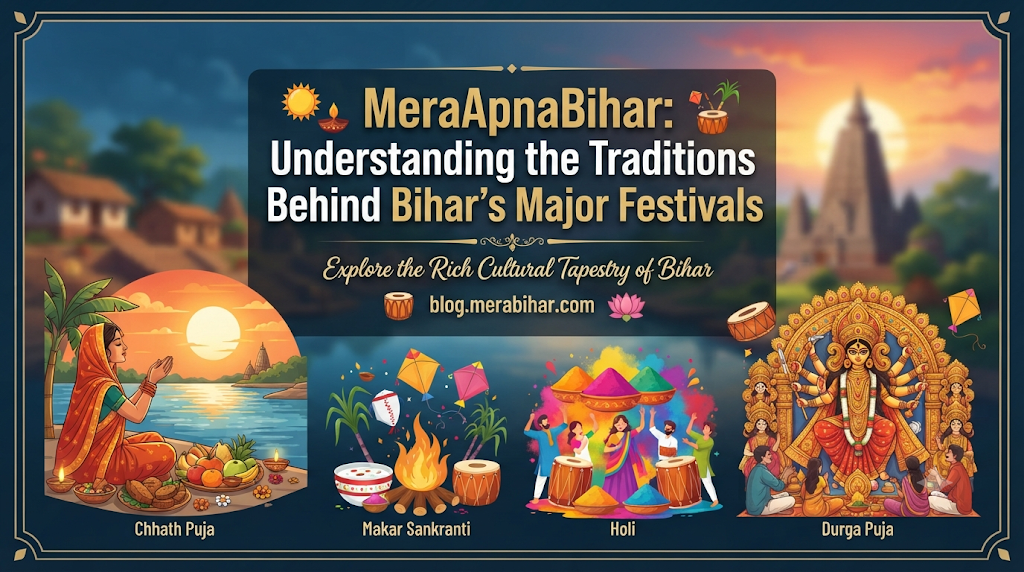
To truly understand Bihar is to look beyond conventional tourism and step into a region defined by historical weight, sacred traditions, and vibrant community life. Whether you are seeking spiritual solace along ancient pilgrimage routes, eager to sample authentic regional flavors like Litti Chokha, or planning to witness the deep devotion of Chhath Puja, the state presents a complex landscape waiting to be explored. Platforms like MeraApnaBihar act as an essential companion for this journey, organizing travel guides, cultural insights, and vital local updates into a clear, reliable resource for every type of explorer.
What is MeraApnaBihar?
MeraApnaBihar operates as a dedicated regional content platform designed to cover the multifaceted landscape of Bihar. Rather than limiting its scope strictly to tourism or news reporting, the platform weaves together various categories that reflect the daily life, culture, and opportunities within the state.
By presenting these distinct subjects under one digital roof, the platform helps readers navigate Bihar’s past and present without having to jump between unrelated sites.
- Travel and Tourism Coverage: Detailed guides on key historical, spiritual, and natural destinations, offering practical insights for travelers planning a trip.
- Cultural and Historical Insights: Articles that unpack the legacy of ancient dynasties, architectural ruins, folk arts, and regional traditions.
- Food and Gastronomy: Exploration of Bihar’s unique culinary landscape, highlighting iconic regional dishes and local food practices.
- Festivals and Community Celebrations: In-depth looks at major regional events like Chhath Puja, explaining their cultural context and significance.
- Local Updates and Employment: Timely coverage of regional developments, educational announcements, and government recruitment notices.
Bihar Tourism: Understanding the State’s Regional Value
When people begin researching Bihar Tourism, they often discover that the state cannot be understood through a single lens or explored within a single city. Bihar’s tourism potential spreads across distinct regions, each defined by different historical eras, religious philosophies, and natural geography.
Spirituality forms a core pillar of tourism here. Bodh Gaya stands as one of the world’s most vital pilgrimage centers for Buddhists, marking the location where Gautama Buddha attained enlightenment. Similarly, Rajgir and Vaishali carry immense sanctity for both Buddhists and Jains. Beyond spiritual traditions, ancient seats of learning like Nalanda and Vikramshila draw scholars and heritage lovers who wish to study early academic institutions.
Meanwhile, travelers interested in architecture and royal history can explore sites like the tomb of Sher Shah Suri in Sasaram or the historical landmarks scattered across Patna. Valmiki National Park in the north offers a view into the state’s natural wildlife ecosystems. Exploring Bihar effectively means recognizing this geographic and thematic variety.
Key Bihar Tourist Places to Research Before Visiting
Planning a trip requires familiarizing yourself with major destinations and what each location offers. Here is an overview of significant Bihar Tourist Places that form the backbone of regional travel.
Bodh Gaya
Located in the Gaya district, Bodh Gaya is famous globally for the UNESCO World Heritage Site, the Mahabodhi Temple Complex. Visitors come to see the ancient temple structure, the sacred Bodhi Tree, and the various international monasteries built by Buddhist communities from Japan, Thailand, Bhutan, and Sri Lanka. It is primarily a place for quiet reflection, architectural study, and spiritual inquiry.
Rajgir
Surrounded by five green hills, Rajgir was the first capital of the ancient kingdom of Magadha. It holds deep meaning for both Buddhism and Jainism. Key highlights include the Gridhakuta (Vulture Peak), the Vishwa Shanti Stupa, the hot springs, and ancient stone fortifications. It appeals to travelers interested in landscape, history, and ancient pilgrimage routes.
Nalanda
Short distance from Rajgir lies Nalanda, renowned for the ruins of the ancient Nalanda Mahavihara, one of the world’s earliest residential universities. The excavated brick ruins, stupas, monasteries, and the nearby Archaeological Museum allow visitors to visualize how higher education functioned between the 5th and 12th centuries CE.
Patna
As the modern state capital, Patna balances ancient history with contemporary urban life. Historical sites include the Golghar granary, the Patna Museum, the Bihar Museum, and Takht Sri Harmandir Sahib (one of the holiest sites in Sikhism, marking the birthplace of Guru Gobind Singh Ji). It serves as a natural entry point and transit hub for travelers entering Bihar.
Vaishali
Vaishali holds a prominent place in democratic and religious history. It is recognized as one of the world’s earliest republics (the Licchavi republic) and is the birthplace of Lord Mahavira. Key points of interest include the Ashokan Pillar at Kolhua, the Relic Stupa, and peaceful countryside surroundings.
Sasaram
Situated in southwestern Bihar, Sasaram is famous for its impressive Indo-Islamic architecture. The red sandstone Tomb of Sher Shah Suri, set in the middle of an artificial lake, is an architectural marvel. The town also features historical forts and waterfalls in the surrounding Kaimur range.
Valmiki Nagar
Located near the India-Nepal border in the West Champaran district, Valmiki National Park provides a stark contrast to Bihar’s urban and monument-heavy sites. It offers dense forests, river valleys, and wildlife conservation areas, making it suitable for nature enthusiasts.
Organizing Places to Visit in Bihar by Travel Interest
Instead of visiting locations at random, organizing potential Places to Visit in Bihar by interest category helps travelers design balanced itineraries.
Historical and Architectural Destinations
Travelers interested in politics, empire building, and ancient education should prioritize Nalanda, Rajgir, Vaishali, and Sasaram. These locations provide tangible evidence of Bihar’s role in shaping early Indian statecraft, academic traditions, and architectural styles.
Religious and Pilgrimage Sites
Spiritual travelers often design circuits around their faith background or comparative religious interest:
- Buddhist Circuit: Bodh Gaya, Rajgir, Nalanda, Vaishali, and Lauriya Nandangarh.
- Jain Circuit: Rajgir, Pawapuri (where Lord Mahavira attained Nirvana), and Vaishali.
- Sikh Circuit: Takht Sri Harmandir Sahib and associated historical Gurdwaras in Patna.
- Hindu Pilgrimage: Gaya (famous for Vishnupad Temple and Pind Daan rituals) and various ancient temples along the Ganges.
Nature and Wildlife Outings
For outdoor lovers, combining a trip to Valmiki National Park with visits to the waterfalls of Kaimur or the wetlands of Kanwar Lake provides a refreshing look at Bihar’s ecological diversity.
Family and Cultural Outings
Families often prefer destinations with accessible infrastructure, parks, and interactive educational spaces. Patna’s Bihar Museum, Rajgir’s ropeway and glass bridge, and peaceful monastic gardens in Bodh Gaya fit these requirements well.
A Practical Bihar Travel Guide for First-Time Visitors
A successful trip depends heavily on preparation. Using a reliable Bihar Travel Guide approach ensures that logistical details are handled before departure.
1. Choosing the Right Season
The ideal period for traveling in Bihar is during the cooler months, generally from October to March. Temperatures during this window are pleasant for outdoor sightseeing and heritage walks. Summers (April to June) can be intensely hot, while the monsoon season (July to September) brings heavy rainfall that may affect road travel in rural areas.
2. Transport Infrastructure
Patna serves as the primary transport hub, connected by major rail routes and Jay Prakash Narayan Airport. Gaya also operates an airport with seasonal international flights catering to Buddhist pilgrims. Inter-city travel is facilitated by regular train services and direct highways. Renting a private vehicle or hiring regional taxis is often the most practical option for reaching spread-out heritage sites.
3. Accommodation Research
Major centers like Patna, Bodh Gaya, and Rajgir offer varied lodging options ranging from budget guesthouses to star-rated hotels and monastic stays. However, smaller historical towns may have simpler facilities. It is wise to book accommodations well in advance, especially during peak pilgrimage seasons or major festivals.
4. Respecting Local Customs
Many key destinations in Bihar are active places of worship or protected archaeological ruins. Visitors should dress modestly when visiting religious sites, remove footwear where required, and follow guidelines regarding photography near sacred shrines or delicate artifacts.
Engaging Things to Do in Bihar
Beyond viewing monuments, travelers can participate in activities that offer deeper engagement with the region. Identifying meaningful Things to Do in Bihar transforms a standard vacation into a memorable learning experience.
- Explore World Heritage Ruins on Foot: Walk through the excavated remains of Nalanda University with a certified guide to understand how ancient lecture halls, dormitories, and libraries were arranged.
- Experience Sunset at Gridhakuta Peak: Take the cable car or walk up Vulture Peak in Rajgir to view the surrounding hill ranges while learning about ancient discourses delivered at the site.
- Participate in Monastic Walks in Bodh Gaya: Visit monasteries constructed by different international Buddhist communities to observe how distinct architectural and cultural traditions honor the same spiritual roots.
- Sample Regional Culinary Traditions: Dedicate time to trying local street foods and traditional thalis at established local eateries.
- Observe Traditional Art Forms: Visit artisan hubs or museum galleries to see Madhubani (Mithila) paintings and Manjusha art, learning about the symbols and natural dyes used by local artists.
- Attend Evening Aarti along the Ganges: Experience the riverfront atmosphere at Patna’s ghats during the evening prayers.
Understanding Bihar Culture and Heritage
To appreciate the state fully, one must explore Bihar Culture and Heritage. Bihar’s cultural identity is woven from ancient intellectual traditions, distinct linguistic belts, folk art, and deep-rooted spiritual values.
Historically, Bihar was a center of global learning. The intellectual atmosphere of ancient Magadha nurtured scholars like Aryabhata, Chanakya, and Vatsyayana. This legacy of curiosity and study continues to influence local values today, where education is held in high esteem.
The state divides into distinct cultural and linguistic sub-regions, including Mithila, Bhojpur, Magadh, and Angika territory. Each area brings its own dialects, folk songs, traditions, and artistic styles:
- Madhubani Art (Mithila Painting): Originating from the Mithila region, this world-renowned art form uses geometric patterns, natural pigments, and narrative depictions of mythology and daily life.
- Manjusha Art: Hailing from the Angika region (Bhagalpur), this line-drawing art style centers around regional folk legends and vibrant colors.
- Sikki Grass Craft: A traditional craft where local grass is dyed and woven into handcrafted boxes, toys, and decorative objects.
- Folk Music and Theater: Regional music is deeply connected to seasons, agricultural cycles, and family ceremonies, carried forward through generations without relying on commercial media.
Exploring the Famous Food of Bihar
Food offers one of the most direct ways to connect with regional culture. The Famous Food of Bihar is defined by seasonal local produce, roasted grains, balanced spices, and healthy preparations that suit the local climate.
Litti Chokha
The undisputed flagship dish of Bihar. Litti consists of whole-wheat dough balls stuffed with spiced sattu (roasted gram flour), baked over coal or cow dung cakes, and tossed in ghee. It is traditionally served with Chokha—a savory mash of roasted eggplant, tomatoes, potatoes, garlic, and mustard oil.
Sattu-Based Dishes
Sattu is a nutritional powerhouse in Bihar. Beyond Litti, it is consumed as a refreshing savory drink mixed with cold water, lemon, and roasted cumin, or prepared as a sweet beverage. It is also used as a filling for Sattu Paratha.
Iconic Regional Sweets
- Khaja: A layered, crispy pastry dipped in sugar syrup, associated with Silao near Rajgir.
- Tilkut: A winter sweet made from crushed sesame seeds and jaggery or sugar, famous in Gaya.
- Balushahi: A soft, glazed sweet pastry popular across central districts.
- Thekua: A traditional deep-fried sweet made from wheat flour, jaggery, and dry fruits, prepared as a sacred offering during Chhath Puja.
Savory Snacks and Everyday Meals
Everyday meals feature dishes like Chana Ghugni (spiced chickpea curry), Pittha (steamed rice dumpling stuffed with lentils or sweet fillings), and Dal Puri. Local street food stalls offer fresh preparations that reflect regional flavors without heavy commercial processing.
Festivals of Bihar: Traditions and Celebrations
Festivals in Bihar are non-commercial, deeply spiritual community events centered around family bonds, seasonal changes, and gratitude toward nature. Understanding the Festivals of Bihar gives visitors insight into the heart of regional society.
Chhath Puja
Chhath Puja is the most significant festival celebrated across Bihar. Spanning four rigorous days, it is dedicated to worshipping the Sun God (Surya) and Chhathi Maiya.
The festival emphasizes extreme purity, fasting without water (Nirjala), preparing traditional offerings (Thekua), and standing in river waters to offer prayers at sunset and sunrise. It is a striking demonstration of community unity, clean riverbanks, and devotion without reliance on priestly intermediaries.
Sonepur Cattle Fair (Sonepur Mela)
Held near the confluence of the Ganges and Gandak rivers in Sonepur (near Patna) on Karthik Purnima, this is one of Asia’s largest historic cattle fairs. It brings together livestock trading, local handicrafts, cultural performances, and traditional amusement rides.
Shravani Mela
During the Hindu month of Shravan, millions of devotees (Kanwaris) undertake a pilgrimage, carrying holy water from the Ganges at Sultanganj to offer at pilgrimage sites. The atmosphere along the travel route becomes a vibrant sea of saffron-clad pilgrims.
Regional Cultural Celebrations
Festivals like Sama Chakeva in Mithila celebrate the bond between brothers and sisters through clay idols and folk songs. Meanwhile, major pan-Indian festivals such as Pitrupaksha Mela in Gaya draw people specifically for ancestral remembrance rituals.
Information Categorization on MeraApnaBihar
To understand how a regional platform structures diverse content, the following table breaks down information categories, the insights provided, and the primary audience served.
| Information Area | What Readers Can Learn | Who It Helps |
| Tourism | Destination overviews, ideal travel windows, itinerary suggestions, and practical transit advice. | Out-of-state tourists, international pilgrims, and local weekend travelers. |
| Tourist Places | In-depth historical background, architectural highlights, and site significance. | Heritage enthusiasts, students, and research-oriented visitors. |
| Travel Planning | Logistics guidance, route planning, accommodation considerations, and seasonal weather tips. | Independent travelers, families, and group tour organizers. |
| Culture & Heritage | Analysis of folk arts (Madhubani, Manjusha), regional literature, history, and linguistic zones. | Cultural researchers, art lovers, and history students. |
| Food & Gastronomy | Profiles of traditional dishes (Litti Chokha, Khaja), regional food culture, and authentic ingredients. | Food enthusiasts, culinary bloggers, and curious travelers. |
| Festivals | Cultural meaning, ritual schedules, behavioral expectations for visitors, and community traditions. | Cultural mappers, photographers, and returning non-resident Biharis. |
| News & Updates | Summaries of local administrative changes, regional developments, and public notices. | Local residents, students, and regional professionals. |
| Government Jobs | Informational updates on public service recruitment drives, eligibility rules, and notification links. | Job seekers, competitive exam aspirants, and career counselors. |
Who Can Benefit from MeraApnaBihar?
A multi-topic platform provides distinct value to different groups of readers based on their personal or professional goals.
1. First-Time Bihar Travelers
People visiting Bihar for the first time often do not know where to start. Having access to clear summaries of major destinations, transit hubs, and cultural norms helps them overcome travel uncertainty and build an enjoyable itinerary.
2. Families Planning Bihar Trips
Family vacations require balancing travel distances, comfortable stays, kid-friendly educational spots, and reliable food choices. Comprehensive travel guides help families filter destinations that suit all age groups comfortably.
3. Students and Young Travelers
Budget-conscious students and youth travelers benefit from detailed practical guides that highlight low-cost travel routes, affordable stays, and high-value educational sites like museums and ruins.
4. History and Heritage Enthusiasts
Readers looking beyond basic sight-seeing appreciate content that delves into ancient history, architectural styles, and regional folklore. Detailed cultural articles turn a simple monument visit into an enriching educational experience.
5. Bihar Residents and Local Readers
Local residents use regional platforms to stay connected with their home state. Reading about lesser-known destinations, regional food heritage, and community updates fosters a stronger sense of local pride and cultural connection.
6. Job and Information Seekers
A significant portion of regional readers seek updates on career opportunities. Providing clear summaries of educational announcements, competitive examination patterns (such as BPSC updates), and government recruitment drives serves as a useful starting point for career research.
Bihar News and Updates: Staying Informed on Regional Developments
Beyond static historical content, tracking Bihar News and Updates is essential for both residents and prospective visitors. Regional developments influence travel conditions, public infrastructure, local policy, and career opportunities.
When consuming local news and updates online, readers should observe a few sensible practices:
- Check Publication Dates: Always verify when an article was published, especially regarding road conditions, transport schedules, or public notices.
- Differentiate Evergreen from Changing News: Historical facts about Nalanda do not change, but travel advisories, festival dates, and government regulations evolve constantly.
- Verify Official Announcements: For public policy, infrastructure changes, or emergency updates, cross-check news summaries with official state portals or press releases.
Navigating Bihar Government Jobs Information Responsibly
For thousands of young professionals across the state, tracking Bihar Government Jobs and competitive examination updates is a top priority. Recruitment drives managed by state bodies such as the Bihar Public Service Commission (BPSC), Bihar Staff Selection Commission (BSSC), and state education boards command widespread attention.
Informational platforms perform an important service by summarizing recruitment notices, explaining exam patterns, and highlighting application timelines. However, readers seeking public employment should follow a strict verification protocol:
- Treat Informational Articles as Alerts: Use third-party summaries to learn that a recruitment notification has been issued.
- Download the Official Notification: Always navigate to the official portal of the hiring agency (e.g., official BPSC portal) to download the complete, authorized notification PDF.
- Verify Eligibility Criteria: Thoroughly check educational requirements, age limits, reservation rules, and document requirements directly from the official document.
- Confirm Dates and URLs: Verify opening and closing application dates directly on the official site to avoid missing deadlines or falling victim to phishing sites.
Informational Resource Alignment for Readers
To help readers match their specific goals with the right content and verification steps, the following table maps reader objectives to relevant content areas.
| Reader Goal | Useful MeraApnaBihar Content | What to Verify Separately |
| Planning a Bihar Trip | Destination overviews, route recommendations, and lists of key attractions. | Current train/flight schedules, seasonal hotel rates, and weather forecasts. |
| Choosing Tourist Places | Categorized attraction lists (historical, spiritual, nature). | Monument opening hours, weekly closure days, and entry ticket rules. |
| Understanding Heritage | Historical context articles, art guides (Madhubani), and cultural overviews. | Specific academic citations or deep museum catalog details. |
| Exploring Local Food | Guides to iconic dishes, regional specialties, and culinary history. | Specific restaurant operating hours, hygiene ratings, and current prices. |
| Planning for Festivals | Descriptions of festival rituals, cultural background, and public celebrations. | Exact calendar dates for upcoming years and local traffic diversions. |
| Checking Local Updates | Summaries of infrastructure progress, state events, and regional news. | Official government press statements and official news bulletins. |
| Researching Government Jobs | Summaries of recruitment drives, eligibility overviews, and syllabus outlines. | Official recruitment notification PDFs, application portals, and exam dates. |
Common Mistakes to Avoid When Planning a Bihar Trip
Traveling through Bihar can be immensely rewarding, but poor planning leads to unnecessary hassle. Avoid these common mistakes:
- Trying to Cover Too Much Ground: Attempting to visit Patna, Bodh Gaya, Rajgir, Nalanda, Vaishali, and Sasaram in three days results in exhaustion. Group nearby destinations together (e.g., Bodh Gaya + Rajgir + Nalanda).
- Underestimating Travel Times: Distance in kilometers does not always reflect travel time. Road conditions, local traffic, and rural routes require buffer time in your schedule.
- Ignoring Seasonal Weather: Visiting open archaeological ruins like Nalanda in the middle of a June afternoon can be tough due to intense heat. Plan outdoor sightseeing for early mornings or late afternoons.
- Rushing Cultural and Spiritual Sites: Places like Bodh Gaya or ancient ruins require unhurried time to absorb their quiet atmosphere and history.
- Not Researching Local Food Spots: Missing out on authentic local eateries by sticking strictly to hotel room service deprives you of a major part of Bihar’s cultural experience.
- Assuming All Sites Have Identical Infrastructure: While major hubs have modern amenities, smaller heritage spots may have limited ATM access or simple dining options. Carry some cash and basic travel essentials.
An 8-Step Bihar Travel Research Guide
Follow this step-by-step checklist to turn raw travel information into a smooth, well-planned journey.
Step 1: Decide Your Travel Purpose
Determine the primary focus of your trip: Is it a spiritual pilgrimage, a historical study tour, a culinary exploration, a family vacation, or a mix of these?
Step 2: Select Destinations
Choose 2 to 4 key destinations that align with your purpose and fit comfortably within your available travel days.
Step 3: Research Each Destination
Read dedicated destination guides to understand the main points of interest, historical background, and local rules for each site on your list.
Step 4: Plan the Route
Map out your entry point (usually Patna or Gaya), look up train or highway connections between your selected stops, and estimate realistic transit times.
Step 5: Check the Travel Season
Align your travel dates with favorable weather conditions (preferably October to March) or specific cultural events like Chhath Puja or the Sonepur Fair.
Step 6: Research Stay and Food Options
Look up accommodations in your target hubs, check reader reviews, and note recommended local dishes and verified eateries to try.
Step 7: Verify Changing Information
Double-check monument opening hours, entry rules, seasonal transport schedules, and local advisories close to your departure date.
Step 8: Prepare the Final Itinerary
Assemble a flexible daily schedule that leaves room for rest, relaxed meals, unexpected delays, and spontaneous local exploration.
Local Culture and Responsible Travel Practices
Responsible travel ensures that your visit positively impacts local communities while preserving historic heritage for future generations.
- Protect Archaeological Sites: Ancient structures like the brick ruins of Nalanda or Ashokan pillars are fragile heritage assets. Never lean on delicate walls, climb restricted structures, or leave litter behind.
- Respect Sacred Spaces: When entering active temples, monasteries, or gurdwaras, observe silence, follow dress codes, remove footwear, and ask for permission before taking photos of worshipers or sacred idols.
- Support Local Artisans: Purchase authentic Madhubani paintings, Sikki grass products, or local sweets directly from regional craftspeople and family-owned shops to support the local economy.
- Be Mindful of Photography: Always ask politely before taking photos of local residents, especially during family rituals, festival gatherings, or in rural villages.
- Minimize Environmental Impact: Carry reusable water bottles, avoid single-use plastics, and dispose of trash responsibly, particularly when visiting river ghats or nature reserves.
Using Food and Festivals to Understand Bihar
Food and festivals are not isolated entertainment—they are living expressions of regional history, environment, and social values.
When you taste Litti Chokha, you are experiencing a dish shaped by agricultural simplicity, mobility, and healthy ingredients tailored for rural living. When you sample Tilkut in Gaya during winter, you are participating in a seasonal culinary tradition tied to local harvesting cycles and solstice celebrations.
Similarly, observing Chhath Puja reveals core societal values: equal participation on riverbanks regardless of social status, reverence for natural elements (sun and water), and collective family effort. Exploring these aspects gives travelers a genuine connection to Bihar’s living culture.
MeraApnaBihar as a Broader Information Resource
Ultimately, a dedicated regional portal serves a dual function. For outsiders, it acts as an inviting digital gateway that dispels misconceptions, highlights rich tourist destinations, and explains unique traditions. For locals and non-residents, it functions as a dependable hub for staying updated on state news, cultural stories, educational developments, and career notices.
By presenting travel, culture, gastronomy, festivals, news, and employment updates side-by-side, MeraApnaBihar reflects the true complexity of the state—a land proud of its ancient heritage while actively building its modern future.
Frequently Asked Questions (FAQs)
1. What is the best time of year to visit tourist places in Bihar?
The best time to visit Bihar is during the winter months, from October to March. Temperatures are pleasant, making it comfortable for exploring open-air archaeological ruins, walking through historical sites, and attending major outdoor festivals like Chhath Puja and the Sonepur Fair.
2. How many days are recommended for a comprehensive Bihar travel itinerary?
A well-paced trip covering key highlights like Patna, Bodh Gaya, Rajgir, and Nalanda typically takes 5 to 7 days. If you wish to include outlying destinations like Valmiki National Park or Sasaram, plan for an 8 to 10-day itinerary.
3. Is Bihar a suitable destination for family travel?
Yes. Bihar offers many family-friendly experiences, including educational museums in Patna, peaceful international monasteries in Bodh Gaya, scenic ropeway rides in Rajgir, and historic ruins that appeal to children and adults alike.
4. What are the main dishes every visitor should try in Bihar?
Must-try dishes include Litti Chokha (baked wheat balls stuffed with sattu), Sattu drinks, Chana Ghugni, and traditional sweets like Khaja (from Silao), Tilkut (from Gaya), and Thekua.
5. What cultural etiquette should travelers follow at religious places in Bihar?
Dress modestly, remove footwear before entering shrines or temple halls, seek permission before photographing worshipers, and maintain a quiet, respectful presence, especially inside monastic complexes and active pilgrimage sites.
6. How can I reach major tourist destinations like Bodh Gaya and Rajgir?
Patna and Gaya are the primary entry hubs connected by air and rail. From either city, you can reach Rajgir, Nalanda, and Bodh Gaya via regular train services, public buses, or hired private taxis along well-connected highways.
7. Why is Chhath Puja so significant in Bihar’s festival calendar?
Chhath Puja is a major festival dedicated to worshipping the Sun God and nature. It is renowned for its strict rituals, emphasis on cleanliness, four-day fasting traditions, and community gatherings along riverbanks at sunset and sunrise.
8. How does an informational website help in researching Bihar government jobs?
Informational platforms aggregate announcements from various official hiring agencies, providing convenient summaries of eligibility criteria, application dates, and exam structures in one place.
9. Where should job seekers verify official details about Bihar government recruitment?
Job seekers should always cross-check details on the official websites of the respective recruitment bodies—such as the BPSC or BSSC—and download the official notification PDF before submitting applications.
10. Can I explore nature and wildlife destinations in Bihar?
Yes. Beyond historical and religious tourism, Bihar features nature and wildlife experiences, most notably Valmiki National Park in West Champaran, the Kaimur eco-tourism zone, and seasonal wetland sanctuaries like Kanwar Lake.
Conclusion
Ultimately, Bihar rewards those who travel with curiosity, patience, and preparation. Whether your goals center on walking through ancient seats of learning, exploring natural landscapes, or keeping track of local educational and employment updates, approaching the state with reliable knowledge makes all the difference. Resources like MeraApnaBihar simplify this process by bringing travel, culture, news, and practical guidance into a single space. Armed with proper insights and a spirit of responsible exploration, your journey through Bihar will offer not just sights, but stories and perspectives that endure long after your trip ends.
