
Introduction
A promising digital idea may begin with a simple observation: customers are facing a problem, employees are repeating manual work, information is difficult to manage, or an existing service could be delivered more efficiently through technology. However, moving from that observation to a dependable digital product requires much more than hiring developers and beginning to write code. Businesses must validate the problem, understand users, define essential features, choose suitable technology, control development costs, protect data, plan cloud infrastructure, test performance, and prepare the product for continuous improvement. Cotocus.cn presents itself as a product-driven digital engineering company that combines product strategy, artificial intelligence, cloud engineering, DevOps, software development, and operational support. This integrated approach can help organizations connect business thinking with technical execution instead of treating each stage as a separate activity. ing How Cotocus.cn Helps Businesses Bring Digital Ideas to Life
Bringing a digital idea to life means converting a business problem or opportunity into a usable technology solution. That solution may be a website, mobile application, SaaS platform, internal business system, AI-enabled tool, customer portal, digital marketplace, workflow automation platform, or cloud-based enterprise application.
Cotocus.cn describes its approach as product-driven rather than limited to traditional project delivery. Its published services cover product discovery, MVP planning, software architecture, custom application development, AI integration, cloud engineering, DevOps, SaaS development, digital transformation consulting, and engineering training. Approach Means
Why Digital Product Development Is Important for Businesses
Digital product development can influence customer experience, operating efficiency, revenue opportunities, data visibility, employee productivity, and the ability to compete in changing markets.
Customer Experience
A well-designed digital product can make it easier for customers to search, book, buy, communicate, receive support, or manage their accounts.
The common mistake is adding many features without simplifying the customer journey. The better approach is to identify the actions customers perform most often and make those actions clear and reliable.
Business Process Automation
Manual processes can create delays, inconsistent records, repeated data entry, and avoidable errors.
A digital workflow can automate routine approvals, notifications, calculations, document handling, and status updates. However, an inefficient process should not be automated without review. Otherwise, the business may simply reproduce an old problem in software.
Data-Based Decision-Making
Digital platforms can collect structured information about user activity, service quality, operational performance, and product usage.
The business must decide which information is genuinely useful. Collecting excessive data without a clear purpose increases storage, privacy, security, and governance responsibilities.
Scalability
A business may begin with a small number of users but later need to support multiple locations, teams, services, currencies, languages, or customer groups.
Scalability requires early consideration of application architecture, databases, cloud capacity, integrations, access control, and support processes.
Practical Scenario
A training company may initially manage registrations using spreadsheets and messaging applications. As registrations grow, duplicate records, missed payments, and inconsistent communication become common. A properly planned learning and registration platform can centralize these activities, but only when the organization first defines its workflows, roles, payment rules, course structure, and reporting needs.
The Real Problems Businesses Face With Digital Ideas
Most businesses do not suffer from a complete shortage of ideas. They struggle to convert ideas into clear, testable, and manageable product plans.
Unclear Business Problem
A statement such as “we need an AI platform” does not identify a business problem.
A stronger starting point would be:
Our support team spends too much time answering repetitive questions, and customers wait too long for basic information.
This problem may lead to an AI knowledge assistant, but it could also be solved through better documentation, workflow changes, search improvements, or a combination of solutions.
Excessive Features
Founders and business teams often try to include every possible feature in the first release.
This increases cost, delays user feedback, complicates testing, and makes priorities unclear. A focused MVP should test the most important assumption with the smallest complete user journey.
Weak User Understanding
Internal teams may assume they know what customers need without conducting interviews, workflow observation, usability tests, or market research.
This creates a risk of building a technically strong product that users do not understand or value.
Poor Technical Planning
A product can become difficult to maintain when teams choose technology without considering integration, security, expected usage, team skills, data requirements, and future changes.
Separation Between Development and Operations
Some projects treat software launch as the end of development. In practice, a digital product requires monitoring, backups, incident handling, security updates, cloud management, user support, and ongoing releases.
Cotocus.cn lists CI/CD automation, Kubernetes, infrastructure as code, observability, SRE, and platform engineering among its DevOps and cloud capabilities, indicating an emphasis on both building and operating software. ic Expectations
Businesses may expect a digital product to deliver immediate growth without marketing, onboarding, support, analytics, or continuous improvement.
Software can enable a business model, but it cannot replace customer research, operational discipline, or product management.
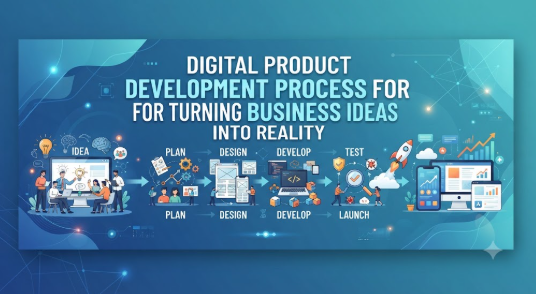
How Cotocus.cn Helps Businesses Bring Digital Ideas to Life Step by Step
Step 1: Clarifying the Business Problem
The first step is defining the actual business problem, the people affected by it, and the result the organization wants to achieve. This matters because an unclear problem creates an unclear product. Teams can apply this step through stakeholder discussions, process reviews, customer interviews, and a concise problem statement. For example, instead of requesting “a mobile application for sales,” a company may identify that field representatives cannot access current inventory while visiting customers. The common mistake is beginning with a preferred technology. The better approach is to begin with the user need and measurable business outcome.
Step 2: Validating the Product Idea
Validation determines whether the proposed solution addresses a real and important need. Businesses can use interviews, surveys, competitor analysis, landing pages, prototypes, or limited pilot programs. For example, a company planning a supplier marketplace may first interview buyers and suppliers to understand onboarding difficulties, pricing expectations, and transaction concerns. The common mistake is treating positive comments as proof of demand. A better approach is to observe whether potential users are willing to test, commit resources, share data, or change their existing behaviour.
Step 3: Defining the MVP
An MVP is the smallest usable version that can test the product’s central value. Cotocus.cn’s published product strategy services include product discovery, user research, MVP scoping, prototyping, technical architecture, development, and go-to-market planning. s because it limits early complexity and creates faster learning. For example, a marketplace MVP may support registration, listing creation, search, enquiries, and administration without immediately adding advanced recommendations or multiple payment systems. The common mistake is calling an incomplete product an MVP. A better MVP is limited in scope but complete enough to solve one meaningful problem.
Step 4: Designing the User Experience
User experience design determines how people understand and interact with the product. Teams should map user journeys, create wireframes, build prototypes, test navigation, and review accessibility. For example, an appointment platform should make it easy to choose a service, professional, date, and time without unnecessary steps. The common mistake is focusing only on visual appearance. The better approach is to prioritize clarity, task completion, error prevention, accessibility, and consistent behaviour across devices.
Step 5: Choosing the Technical Architecture
Technical architecture defines how the application, database, integrations, cloud resources, security controls, and development components work together. The right architecture depends on expected usage, product complexity, compliance needs, team capability, budget, and future plans. A small pilot may not require the same structure as a multi-region enterprise platform. The common mistake is selecting the most fashionable technology. The better approach is choosing technology that is secure, maintainable, appropriately scalable, and supported by available skills.
Step 6: Developing and Testing the Product
Development converts approved designs and requirements into working software. Testing should include feature behaviour, integration, performance, security, usability, and device compatibility. Cotocus.cn lists custom web applications, mobile applications, APIs, enterprise platforms, and SaaS engineering among its development capabilities. take is leaving testing until the end. A better approach is to test continuously during development and include acceptance criteria in every product requirement.
Step 7: Preparing Cloud, DevOps, and Security Operations
Before launch, the product needs reliable deployment, access control, monitoring, backups, incident procedures, and environment management. Automated delivery pipelines can make releases more consistent, while observability helps teams understand errors and performance. The common mistake is assuming cloud hosting automatically provides reliability and security. The better approach is to define ownership, configuration standards, monitoring, recovery procedures, and security responsibilities before users depend on the product.
Step 8: Launching, Measuring, and Improving
A product launch begins the learning phase. Teams should monitor user behaviour, support requests, performance, conversion, retention, feature adoption, and operational incidents. Cotocus.cn states that its product model includes operating and improving products based on usage and feedback rather than treating launch as completion. take is adding features based only on internal opinions. The better approach is to combine user evidence, business priorities, technical health, and product strategy.
Key Factors That Influence Digital Product Success
Problem Clarity
A clear problem statement keeps design, engineering, and business decisions aligned. When priorities conflict, the team can return to the original outcome.
User Research Quality
Research should involve the people who will actually use, buy, administer, or support the product. Decisions based on assumptions may be faster initially but more expensive to correct later.
Product Scope
A controlled scope allows the team to deliver a complete core journey. An uncontrolled scope creates delays, changing requirements, and inconsistent quality.
Technical Feasibility
Some product ideas depend on data, integrations, device capabilities, third-party systems, or AI accuracy that may not yet be available. Early technical experiments can identify these limitations.
Security and Privacy
Security is not only a technical feature. It includes data collection, user permissions, storage, authentication, third-party access, incident handling, and employee practices.
Cloud Architecture
Cloud services can support flexibility and scaling, but poor resource planning may create unnecessary complexity or cost.
Development Process
Clear requirements, version control, code review, testing, documentation, and release management help teams maintain quality as the product grows.
Product Ownership
Someone must decide priorities, approve trade-offs, review results, and connect business teams with technical teams. Without clear ownership, projects often become collections of unrelated requests.
Team Capability
The organization needs suitable skills across product management, UX, engineering, cloud, DevOps, security, data, and support. Cotocus.cn also offers corporate training in areas such as DevOps, cloud, Kubernetes, SRE, AI, platform engineering, and related technical practices. s Improvement
Successful digital products are reviewed regularly. User expectations, business processes, technology, security threats, and operating costs change over time.
Detailed Breakdown of Cotocus.cn’s Digital Engineering Approach
Product Strategy and Discovery
Product discovery connects an idea with evidence.
The discovery process may examine:
- Business objectives
- Customer problems
- Existing alternatives
- User journeys
- Revenue or operating model
- Technical constraints
- Data availability
- Regulatory responsibilities
- Product risks
- MVP boundaries
Cotocus.cn includes product discovery workshops, user research, MVP scoping, technical architecture, rapid prototyping, and go-to-market planning in its published product strategy offering. o avoid is treating discovery as unnecessary discussion. A short discovery phase can reduce much larger development mistakes.
Custom Software Development
Custom software is designed around an organization’s specific processes or product model.
It may include:
- Customer portals
- Internal workflow systems
- Enterprise applications
- Mobile applications
- Web applications
- APIs
- Reporting systems
- Administration panels
- Integration layers
- Automation tools
Custom development is useful when standard software cannot support an important workflow or competitive requirement. It is not automatically the best choice for every problem. Businesses should compare custom development with existing products before investing.
SaaS Product Development
Software as a Service allows customers to access an application through a subscription, usage-based plan, or managed account.
A SaaS platform may require:
- Tenant separation
- User and role management
- Subscription handling
- Billing integration
- Account administration
- Data security
- Usage measurement
- Support workflows
- Scalable infrastructure
- Regular product releases
Cotocus.cn describes its SaaS engineering services as covering multi-tenant architecture, billing, user management, API design, scalability planning, and iterative product growth. stake is focusing only on customer-facing features while ignoring account management, billing, support, monitoring, and administration.
Artificial Intelligence Integration
AI can support search, recommendations, document processing, content assistance, forecasting, customer support, anomaly detection, and workflow automation.
Cotocus.cn lists machine learning, large language model integration, retrieval-augmented generation, computer vision, natural language processing, AI agents, MLOps, and AI monitoring among its capabilities. ould not add AI simply because it is popular. They should ask:
- What decision or task will AI improve?
- Is suitable data available?
- How will accuracy be tested?
- What happens when the output is wrong?
- Will a human review important outputs?
- What information may be sent to an AI service?
- How will cost and performance be monitored?
- Can a simpler rule-based system solve the problem?
The better approach is AI-first where AI creates clear value, not AI-only where every problem is forced into an AI solution.
Cloud Engineering
Cloud engineering involves more than placing an application on a remote server. It includes architecture, networking, identity, databases, storage, monitoring, backups, scalability, security, and cost management.
Cotocus.cn states that it works across AWS, Azure, and Google Cloud, including migration, optimization, cloud-native applications, microservices, and serverless platforms. oud approach should match the product’s current stage. A complicated architecture may increase cost and maintenance without creating immediate value.
DevOps and Continuous Delivery
DevOps connects software development with deployment and operations.
Common practices include:
- Version control
- Automated builds
- Automated testing
- CI/CD pipelines
- Infrastructure as code
- Environment consistency
- Release approval
- Security checks
- Monitoring
- Incident response
Cotocus.cn identifies CI/CD, GitOps, automated testing, release orchestration, DevSecOps, Kubernetes, observability, and platform engineering within its services. ot merely faster releases. It is creating a dependable and repeatable delivery process.
Site Reliability Engineering
SRE applies engineering practices to service reliability.
Teams may use:
- Service-level indicators
- Service-level objectives
- Error budgets
- Incident reviews
- Automated recovery
- Capacity planning
- Performance monitoring
- Alert management
The mistake is expecting zero failures. A better approach is defining acceptable reliability, reducing avoidable incidents, and learning systematically when problems occur.
Digital Transformation Consulting
Digital transformation involves changing business processes, technology, skills, and operating models.
Cotocus.cn’s published transformation services include current-state assessment, transformation roadmaps, architecture modernization, process redesign, automation planning, cloud adoption, and engineering culture development. ion programme should not begin with buying many tools. It should begin with identifying business bottlenecks and deciding which changes will create meaningful improvement.
Training and Team Enablement
A product cannot remain healthy if internal teams do not understand how to operate, improve, and support it.
Training may be required for:
- Developers
- Cloud engineers
- Operations teams
- Security teams
- Product managers
- Administrators
- Customer-support teams
- Business users
Cotocus.cn publishes corporate and public training across DevOps, SRE, DevSecOps, cloud, Kubernetes, Terraform, GitOps, MLOps, AIOps, FinOps, platform engineering, software architecture, observability, and security engineering. proach is to transfer knowledge during the project rather than depending permanently on a small number of specialists.
Common Mistakes Businesses Make With Digital Product Development
Starting With Technology Instead of the Problem
This happens when leaders decide that they need AI, blockchain, a mobile app, or microservices before defining the business need.
The risk is investing in technology that does not improve the user experience or operating process.
Businesses should document the problem, affected users, current process, expected improvement, and method of measuring results.
Building Too Many Features
Teams often fear that customers will reject a simple first version.
The result may be a delayed, expensive, and difficult-to-test product. Businesses should rank features according to user value, business value, urgency, dependency, and evidence.
Ignoring User Feedback
Internal teams may design the product around their own preferences.
This can create confusing navigation, unnecessary steps, and missing features. Businesses should test prototypes and early versions with representative users.
Underestimating Administration Features
Customer-facing features receive attention, while dashboards, permissions, reports, moderation, support tools, and configuration screens are postponed.
This makes the product difficult to operate. Administrative requirements should be included in the MVP plan.
Treating Security as a Final Review
Security problems become more expensive to correct when they are discovered after development.
Security requirements should influence architecture, data design, identity management, coding, testing, deployment, and monitoring.
Choosing Complex Architecture Too Early
A business may adopt microservices, multiple databases, advanced orchestration, and many cloud services before the product has users.
This creates operational burden. Architecture should solve current needs while leaving reasonable room for future growth.
Ignoring Operating Costs
Development cost is only one part of product ownership.
Businesses should also estimate cloud hosting, software licences, third-party APIs, monitoring, support, maintenance, security reviews, backups, and future development.
Depending on One Individual
When only one person understands the application, infrastructure, or deployment process, the business faces continuity risk.
Documentation, code review, shared access, training, and standard processes reduce this dependency.
Measuring Only Launch Completion
A launch date does not prove product success.
Teams should measure adoption, task completion, user satisfaction, reliability, support volume, operational improvement, and commercial outcomes.
Failing to Plan for Change
Products require bug fixes, security updates, feature improvements, infrastructure changes, and user support.
A maintenance and improvement plan should be included before launch.
Don’t Do This Checklist
- Do not begin coding with an unclear problem.
- Do not treat every requested feature as essential.
- Do not select technology only because it is popular.
- Do not collect data without a clear purpose.
- Do not postpone security until the final stage.
- Do not ignore administrative and support workflows.
- Do not launch without monitoring and backup procedures.
- Do not assume all users understand technical language.
- Do not depend on undocumented knowledge.
- Do not measure success only by completing development.
- Do not automate a broken business process without reviewing it.
- Do not use AI outputs for important decisions without suitable controls.
Five Practical Real-Life Examples
Example 1: Small Retailer Managing Orders Manually
A retailer receives orders through calls, messages, and social media, causing duplicate entries and missed updates. Building a large marketplace immediately would create unnecessary risk. A better action is to begin with a simple order-management portal covering product availability, order status, customer details, and administration. The learning is that the first product should solve the most frequent operational problem.
Example 2: Training Company Developing a Learning Platform
A training provider wants recorded courses, live sessions, assessments, certificates, payments, communities, and job support in one release. This scope delays testing. A better approach is to launch with registration, course access, learning progress, assessment, and administration before adding secondary services. The learning is that a focused core journey creates better early feedback.
Example 3: Enterprise Introducing an AI Knowledge Assistant
An enterprise wants employees to search internal policies using natural language. The main challenge is not only selecting an AI model but also controlling document access, verifying answers, updating sources, and protecting confidential information. The better action is a limited pilot using approved documents and clear human review. The learning is that AI governance is part of product design.
Example 4: Healthcare Organization Modernizing Appointments
A healthcare organization wants online appointment booking but has inconsistent schedules across departments. Building the application without correcting the scheduling process would reproduce the same confusion digitally. The better action is to standardize availability, cancellation, reminders, roles, and record handling before automation. The learning is that digital transformation requires process improvement.
Example 5: Growing SaaS Business Facing Release Problems
A SaaS team releases features manually, creating configuration differences and occasional failures. Adding more developers does not solve the delivery weakness. The better action is to introduce version-controlled infrastructure, automated testing, CI/CD, monitoring, and release procedures. The learning is that product growth depends on operational engineering as well as feature development.
Table 1: Digital Idea Development Stages
| Development Stage | Main Business Question | Practical Output | Major Risk to Control |
|---|---|---|---|
| Problem discovery | What meaningful problem are we solving? | Problem statement and user profile | Building without real demand |
| Product validation | Will target users value the solution? | Research findings or tested prototype | Depending on assumptions |
| MVP planning | What is the smallest complete solution? | Prioritized MVP scope | Excessive features |
| UX design | Can users complete important tasks easily? | User flows, wireframes, prototype | Confusing experience |
| Architecture | How should the solution be structured? | Technical architecture and data plan | Poor scalability or complexity |
| Development | How will the product be built and tested? | Working product increments | Quality and integration failures |
| Launch preparation | How will the product operate reliably? | Deployment, monitoring, backup and support plan | Security or service failure |
| Improvement | What should change based on evidence? | Product roadmap and measured priorities | Opinion-based development |
Table 2: Common Product Mistakes and Better Approaches
| Common Mistake | Likely Consequence | Better Approach |
|---|---|---|
| Starting with a preferred technology | Solution does not match the problem | Define users, problems, and outcomes first |
| Including every idea in the MVP | Higher cost and delayed feedback | Prioritize one complete core journey |
| Skipping user testing | Poor adoption and usability problems | Test prototypes with representative users |
| Ignoring administration needs | Product becomes difficult to operate | Design customer and administrator workflows together |
| Overengineering architecture | Higher cloud and maintenance burden | Match complexity to actual product needs |
| Delaying security work | Expensive redesign and data exposure risk | Apply security throughout the lifecycle |
| Launching without monitoring | Problems remain unnoticed | Define logs, metrics, alerts, and ownership |
| Depending on one developer | Continuity and knowledge risk | Use documentation, code review, and shared processes |
| Measuring only delivery dates | Weak understanding of product value | Track usage, reliability, satisfaction, and outcomes |
| Treating launch as completion | Product quality declines over time | Plan maintenance and continuous improvement |
Tools, Methods, and Frameworks Businesses Can Use
Problem Statement Framework
A problem statement explains who experiences the problem, what happens, why it matters, and what result is required.
A useful structure is:
A specific user group experiences a specific difficulty during a particular activity, causing a measurable business or user impact.
This prevents teams from beginning with vague goals.
User Journey Map
A user journey map shows the steps a person follows before, during, and after using a service.
It helps teams identify delays, confusion, repeated actions, emotional concerns, and opportunities for automation.
Feature Prioritization Framework
A prioritization framework ranks features based on factors such as:
- User value
- Business value
- Urgency
- Technical effort
- Risk reduction
- Dependency
- Available evidence
This prevents the loudest request from automatically becoming the highest priority.
Prototype
A prototype is an early representation of the product. It may be a sketch, clickable screen design, or limited technical demonstration.
It helps teams test navigation and assumptions before full development.
Product Roadmap
A roadmap explains the direction of the product over time.
It should communicate outcomes and priorities rather than promise a fixed list of features regardless of new evidence.
Architecture Decision Record
An architecture decision record documents an important technical decision, the available alternatives, the reason for the selected approach, and its consequences.
It prevents teams from forgetting why a technology or structure was chosen.
Risk Register
A risk register records possible risks, likelihood, impact, owner, warning signs, and mitigation actions.
It helps prevent product, security, financial, technical, and operational risks from remaining hidden.
Definition of Done
The definition of done explains what must be completed before work is accepted.
It may include coding, review, testing, documentation, security checks, deployment preparation, and product-owner approval.
CI/CD Pipeline
A CI/CD pipeline automates software building, testing, and deployment steps.
It reduces avoidable manual differences and makes releases more repeatable.
Observability System
Observability uses logs, metrics, and traces to help teams understand what is happening inside a system.
It helps identify failures, slow performance, unusual behaviour, and service dependencies.
Product Analytics
Product analytics shows how users interact with the application.
Businesses should track only meaningful events connected to product goals and respect privacy requirements.
Monthly Product Review
A monthly review can examine:
- Product usage
- Customer feedback
- Reliability
- Security concerns
- Support requests
- Delivery progress
- Cloud cost
- Technical debt
- Business outcomes
- Next priorities
This creates a regular connection between product strategy and engineering work.
Twelve Expert Tips for Better Digital Product Decisions
1. Define the Problem Before Discussing Features
A clear problem creates a stable reference point for every later decision. Write the user problem, business impact, and expected outcome before creating a feature list.
2. Validate Important Assumptions Early
Every digital idea contains assumptions about users, demand, workflows, technology, and willingness to change. Test the assumptions that could make the entire product unsuccessful before investing heavily.
3. Keep the MVP Small but Complete
A useful MVP should allow users to complete one important journey from beginning to end. Remove secondary features, but do not remove the basic quality required for meaningful use.
4. Include Administrators in Product Research
Administrators, support teams, and operations employees often understand practical difficulties that customers cannot see. Their input can prevent missing dashboards, permissions, reporting, and exception handling.
5. Select Technology According to Context
Technology should reflect expected scale, security, integrations, team skills, budget, and maintenance requirements. Do not copy the architecture of a much larger company without the same needs.
6. Build Security Into Every Stage
Review data collection, permissions, authentication, encryption, third-party services, testing, deployment, and monitoring. Security added late may require major redesign.
7. Estimate the Full Cost of Ownership
Consider development, cloud resources, APIs, licences, monitoring, support, maintenance, security, compliance, and future improvements. A lower initial development price may not produce a lower long-term cost.
8. Use Evidence to Prioritize the Roadmap
Combine user research, analytics, support data, business strategy, technical risk, and operational needs. Avoid prioritizing features only because competitors have them.
9. Document Important Decisions
Document product rules, architecture choices, access procedures, integrations, deployment processes, and known limitations. Documentation protects business continuity and improves onboarding.
10. Plan for Failure and Recovery
Systems may experience errors, traffic spikes, third-party outages, expired credentials, incorrect data, or security incidents. Define monitoring, backups, escalation, recovery, and communication procedures.
11. Develop Internal Capability
External expertise can accelerate delivery, but internal teams should understand product ownership, system operation, data responsibilities, and future priorities. Training and knowledge transfer reduce dependency.
12. Treat Launch as the Beginning of Learning
After launch, review how users behave, which tasks fail, what support requests appear, and whether the product improves the intended business outcome. Use those findings to guide the next release.
Three Case Studies: How Better Understanding Changes Decisions
The following case studies are illustrative examples created to explain product-development decisions. They are not claims about specific Cotocus.cn clients or guaranteed outcomes.
Case Study 1: Service Business Replacing Spreadsheet Operations
Profile: A growing professional-services company with multiple teams and locations.
Situation: Customer enquiries, project assignments, invoices, and work status were managed through separate spreadsheets and messages.
Problem: Employees entered the same information repeatedly, managers lacked a consistent operational view, and customers received delayed updates.
Wrong approach: The company initially planned a large ERP containing finance, human resources, CRM, project management, customer support, and document management.
Better approach: The team first mapped the customer-to-delivery workflow. The initial product focused on enquiry capture, customer records, assignments, status tracking, notifications, and a management dashboard. Existing accounting software remained integrated rather than replaced.
Result or learning: The organization reduced project risk by solving its most important workflow first. Later modules could be considered only after the central process was stable.
Key takeaway: Digital transformation should simplify and connect important processes instead of replacing every system at once.
Case Study 2: Startup Developing an AI-Based Research Platform
Profile: A startup planning a platform that summarizes industry documents for business users.
Situation: The founders expected users to upload reports and receive instant summaries, comparisons, and recommendations.
Problem: Documents contained inconsistent formats, confidential information, specialised terminology, and statements that required source verification.
Wrong approach: The original plan relied on a general AI model without document access controls, source references, quality evaluation, or human review.
Better approach: The startup limited the pilot to one document type and one user group. It introduced controlled access, source-linked responses, feedback collection, output evaluation, and warnings where evidence was insufficient.
Result or learning: The pilot revealed which questions AI could answer reliably and which required expert review. This created a more realistic product roadmap.
Key takeaway: A responsible AI product requires data governance, evaluation, transparency, and failure handling—not only model integration.
Case Study 3: Enterprise Improving Software Delivery
Profile: An enterprise team maintaining several customer-facing applications.
Situation: Releases required manual steps, environment configurations differed, and teams were uncertain about who owned production incidents.
Problem: Feature delivery slowed as the number of applications and developers increased.
Wrong approach: Management initially considered purchasing additional DevOps tools without reviewing workflows or responsibilities.
Better approach: The organization assessed its current delivery process, standardized version control, defined environment ownership, automated builds and tests, introduced infrastructure as code, and established monitoring and incident procedures.
Result or learning: The team gained a more consistent delivery process and better visibility into operational responsibilities. The value came from combining process, automation, skills, and ownership.
Key takeaway: DevOps improvement is an operating-model change supported by tools, not a tool-purchasing exercise.
Risk Awareness: What Businesses Must Check First
Product-Market Risk
This is the risk that users do not consider the problem important enough to adopt or pay for the solution.
Reduce it through interviews, prototypes, pilots, market research, and evidence-based validation.
Scope Risk
Scope risk appears when features continue expanding without adjusting time, budget, or resources.
Reduce it by defining MVP boundaries, using a change process, and prioritizing work according to outcomes.
Technical Feasibility Risk
Some functions may depend on unavailable data, unsupported integrations, unreliable third-party systems, or immature technology.
Reduce it with technical discovery and limited proof-of-concept experiments.
Cybersecurity Risk
Applications may face unauthorised access, weak credentials, vulnerable code, insecure integrations, malware, data leakage, and service attacks.
Reduce this risk through secure design, code review, testing, access control, monitoring, updates, and incident planning.
Data Privacy Risk
Collecting personal, financial, health, employee, or customer data may create legal and ethical responsibilities.
Businesses should collect only necessary data, define retention rules, control access, and seek suitable legal or compliance guidance.
AI Output Risk
AI systems may produce incorrect, biased, incomplete, outdated, or unsupported outputs.
Reduce the risk through evaluation, source controls, clear limitations, human review, monitoring, and restricted use in high-impact decisions.
Cloud Cost Risk
Poorly configured or unused cloud resources may create avoidable expenses.
Reduce this risk through budgets, tagging, alerts, capacity review, suitable architecture, and regular FinOps practices.
Vendor Dependency Risk
A product may depend heavily on one cloud provider, API, platform, or specialist.
Reduce the risk by understanding exit options, maintaining documentation, backing up important data, and reviewing contractual terms.
Reliability Risk
Software may become slow or unavailable during failures or unexpected demand.
Reduce this risk through capacity planning, performance testing, monitoring, redundancy where justified, backups, and recovery procedures.
Integration Risk
External systems may change, fail, return incorrect data, or impose usage limits.
Reduce the risk with validation, timeouts, retries, error handling, monitoring, and fallback procedures.
Compliance Risk
Industry requirements may influence data handling, accessibility, security, records, payments, or communications.
Businesses should identify applicable obligations early and consult qualified professionals where necessary.
Misinformation Risk
Online advice may encourage unnecessary tools, unrealistic architecture, or misleading AI expectations.
Businesses should verify recommendations against their product stage, user needs, and technical context.
Checklist Before Starting a Digital Product
- The business problem is written clearly.
- Target users and decision-makers are identified.
- Existing alternatives have been reviewed.
- Important assumptions have been listed.
- User research or validation has been completed.
- The MVP has one clear core journey.
- Essential and optional features are separated.
- Administrative workflows are included.
- Technical feasibility has been checked.
- Data requirements and ownership are defined.
- Security and privacy responsibilities are reviewed.
- Third-party integrations are assessed.
- Architecture matches the current product stage.
- Development and testing responsibilities are clear.
- Cloud and operational costs are estimated.
- Monitoring, backups, and recovery are planned.
- Product success measurements are defined.
- A post-launch support process exists.
- Knowledge transfer and documentation are planned.
- Legal, compliance, and professional reviews are considered where required.
Businesses should use this checklist during discovery, before approving development, and again before launch. An unchecked item does not always mean development must stop, but the related risk should be understood, assigned, and managed.
Strategic Insights for Better Decision-Making
Build Versus Buy
Businesses should compare custom development with existing software.
Buying may be suitable when the process is standard and available software meets most requirements. Building may be justified when the workflow is strategically important, highly specialised, or capable of creating differentiation.
A hybrid approach may combine a custom customer experience with established payment, communication, analytics, identity, or accounting services.
Platform Versus Individual Application
An individual application solves a defined use case. A platform supports multiple products, teams, workflows, or external developers.
Businesses should not call every application a platform. Platform development requires governance, reusable services, APIs, documentation, access controls, and long-term ownership.
Modular Architecture
A modular system separates responsibilities so that parts can change with less impact on the entire product.
Modularity does not automatically require microservices. A well-structured modular application may be easier to operate during early growth.
Technical Debt Management
Technical debt includes shortcuts or outdated components that make future work slower or riskier.
Not all technical debt must be removed immediately. Teams should identify debt, understand its impact, and prioritize it alongside product features.
Product Metrics Versus Activity Metrics
Activity metrics describe work completed, such as features released or development hours.
Product metrics describe value, such as successful task completion, adoption, retention, reduced processing time, service reliability, or customer satisfaction.
Both are useful, but activity alone does not prove that the product is solving the intended problem.
Human Oversight in AI Products
AI can automate or assist tasks, but important decisions may require human review.
Businesses should define when users can trust automation, when confidence should be displayed, and when the product must escalate to a person.
Cloud Financial Management
Cloud cost should be considered during design, not only after receiving a large invoice.
Teams can review resource usage, storage growth, database capacity, traffic patterns, API consumption, and unused environments.
Internal Developer Experience
Developers work more efficiently when environments, documentation, deployment, testing, access, and service ownership are clear.
Platform engineering and internal developer platforms may help larger teams standardize these activities, but they should be introduced in response to real developer problems.
Roadmap Flexibility
A roadmap should provide direction while allowing priorities to change based on evidence.
Rigid feature promises may force teams to continue work even when users reveal a more important problem.
Governance Without Unnecessary Delay
Governance defines who can approve data use, security exceptions, production releases, architecture changes, and major product priorities.
The goal is not to create excessive approval layers. It is to make important responsibilities visible and consistent.
Key Terms Explained for Beginners
- Digital Product: A software-based service or system that provides continuing value to users, such as an application, platform, marketplace, or SaaS service.
- Product Discovery: The process of understanding users, problems, opportunities, risks, and possible solutions before large-scale development.
- MVP: A minimum viable product is the smallest complete version that allows a business to test its central product assumption with real users.
- Prototype: An early representation of a product used to test ideas, screens, workflows, or technical feasibility.
- User Experience: User experience describes how easily and successfully a person can understand and use a product.
- Custom Software: Software developed for the specific requirements of an organization or customer group.
- SaaS: Software as a Service is software delivered online, commonly through subscriptions or managed accounts.
- Cloud Computing: Cloud computing provides technology resources such as servers, databases, storage, and software services through remote infrastructure.
- API: An application programming interface allows different software systems to exchange information or request functions.
- DevOps: DevOps combines development, operations, automation, and shared responsibility to improve software delivery and reliability.
- CI/CD: Continuous integration and continuous delivery automate software building, testing, and release activities.
- Infrastructure as Code: Infrastructure as code manages cloud and system configuration using version-controlled files rather than repeated manual setup.
- Observability: Observability uses logs, metrics, and traces to help teams understand system behaviour and investigate problems.
- Technical Debt: Technical debt is the future cost created by shortcuts, outdated components, poor structure, or incomplete maintenance.
- MLOps: MLOps applies engineering and operational practices to deploying, monitoring, governing, and improving machine-learning systems.
Who Should Read This Blog
Startup Founders
Founders can use this guide to define MVP scope, validate assumptions, and understand the technical and operational work required after an idea is approved.
Small Business Owners
Small businesses can learn how to automate manual processes without immediately investing in an unnecessarily large system.
Enterprise Leaders
Enterprise leaders can use the guide to connect digital transformation with process improvement, architecture, security, governance, and team capability.
Product Managers
Product managers can apply the frameworks for discovery, prioritization, roadmap planning, measurement, and continuous improvement.
Non-Technical Business Leaders
The explanations help non-technical leaders participate in software decisions without needing to understand programming details.
Software Teams
Development teams can use the guide to align engineering decisions with user problems and business outcomes.
Cloud and DevOps Teams
These teams can better understand how deployment, reliability, observability, security, and infrastructure support the complete product lifecycle.
AI Product Teams
AI teams can review data quality, evaluation, human oversight, governance, monitoring, and responsible product design.
Operations Managers
Operations managers can identify workflows that should be simplified before they are automated.
Digital Transformation Teams
Transformation teams can use the article to avoid tool-first programmes and create business-led modernization roadmaps.
Educational Institutions
Institutions planning learning platforms, administration systems, or AI-enabled services can use the product-planning principles described here.
Finance, Healthcare, Travel, and Marketplace Businesses
Organizations in these areas often manage complex records, users, workflows, transactions, and compliance responsibilities. They can use the guide to structure early product decisions carefully.
Frequently Asked Questions
1. What does bringing a digital idea to life mean?
It means converting an identified business problem into a usable and maintainable software product. The process includes validation, planning, design, architecture, development, testing, deployment, operation, and continuous improvement.
2. How does Cotocus.cn help businesses bring digital ideas to life?
Cotocus.cn states that it combines product strategy, custom software development, SaaS engineering, AI, cloud services, DevOps, digital transformation, and technical enablement. This allows different stages of product planning, delivery, and operation to be considered together. very digital idea need a custom application?
No. Some problems can be solved with existing software, process improvement, integration, or configuration. Custom development is most useful when the requirement is strategically important or cannot be supported adequately by standard products.
4. What should a business do before contacting a development company?
The business should document its problem, target users, current process, expected result, budget limits, available data, essential integrations, and major concerns. The development partner can then help refine assumptions and define the next discovery steps.
5. What is the importance of an MVP?
An MVP allows a business to test its central product assumption without building every possible feature. It reduces early risk, creates faster user feedback, and helps the team make better roadmap decisions.
6. Can Cotocus.cn support AI-based product ideas?
Cotocus.cn lists AI software development, generative AI, LLM integration, RAG, NLP, computer vision, AI agents, MLOps, and intelligent automation among its published services. Businesses should still validate the data, accuracy, security, cost, and human-review requirements of each AI use case. e cloud engineering and DevOps important?
Cloud engineering provides the infrastructure on which a digital product operates. DevOps helps teams build, test, deploy, monitor, and improve software through consistent processes and automation.
8. What is the biggest digital product mistake beginners make?
One of the biggest mistakes is beginning development before clarifying the problem and validating user demand. This can produce a technically functional product that does not deliver meaningful user or business value.
9. How long does digital product development take?
The timeline depends on scope, complexity, design, integrations, data requirements, security, testing, and team availability. A focused MVP is generally easier to estimate than a broad platform with changing requirements.
10. How should businesses measure digital product success?
Businesses should use metrics connected to the original problem. These may include adoption, task completion, reliability, customer satisfaction, processing time, error reduction, retention, revenue, or operating efficiency.
11. Does Cotocus.cn provide team training as well as engineering services?
Yes. Its published training areas include DevOps, cloud, SRE, DevSecOps, Kubernetes, Terraform, GitOps, DataOps, MLOps, AIOps, FinOps, platform engineering, AI, architecture, observability, and security. is the best next step after understanding how Cotocus.cn helps businesses bring digital ideas to life?
The best next step is to create a clear problem statement, identify users, list key assumptions, and define the smallest valuable product journey. A structured discovery discussion can then determine whether research, a prototype, a proof of concept, an MVP, integration, or process improvement is most appropriate.
Conclusion
Understanding how Cotocus.cn helps businesses bring digital ideas to life requires looking beyond software coding. A dependable digital product begins with a clearly defined user or business problem and moves through validation, product discovery, MVP planning, user-experience design, technical architecture, development, security, cloud preparation, DevOps, testing, launch, measurement, and ongoing improvement. Cotocus.cn presents a product-driven model that brings together consulting, AI engineering, custom software, SaaS development, cloud services, DevOps, digital transformation, and technical training. uld still approach every digital project carefully. They should compare building with buying, limit the first release to a meaningful core journey, test assumptions with real users, estimate the full cost of ownership, protect information, plan for operational failures, document important decisions, and establish clear ownership. AI should be applied where it solves a defined problem and where its outputs can be evaluated responsibly. Cloud architecture should match current needs rather than unnecessary future assumptions. DevOps should combine process, automation, teamwork, security, and operational accountability rather than being treated as a collection of tools.
