
Introduction
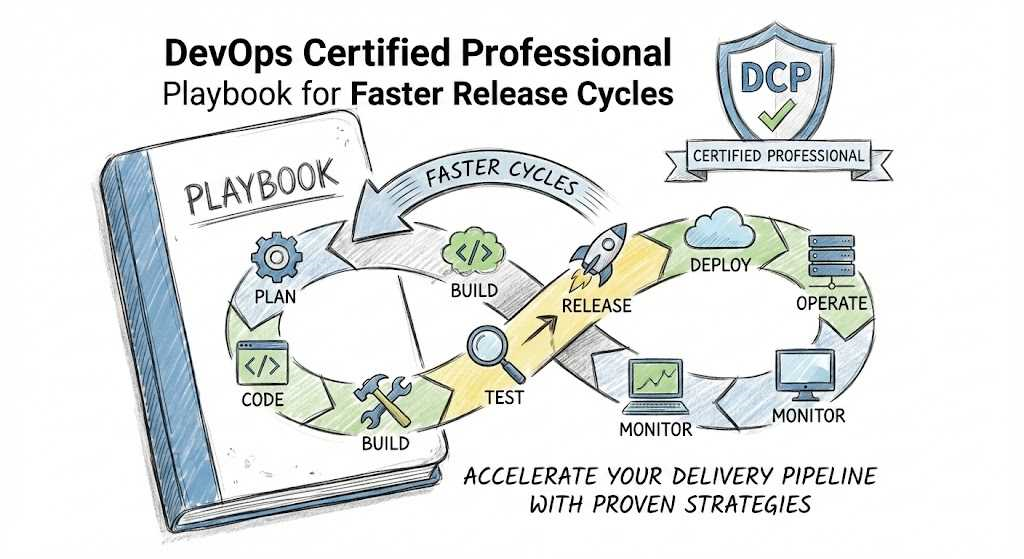
The DevOps Certified Professional (DCP) is a high-tier accreditation meticulously crafted for those who aspire to master the complexities of the modern software delivery lifecycle. It is frequently observed in the industry that while many practitioners are proficient in isolated tools, very few possess a holistic understanding of the entire pipeline. This certification is structured to bridge that gap, ensuring that the critical relationship between development teams and operations staff is fully harmonized. The methodology focuses on creating a culture of continuous improvement, where software is not only released faster but with a significantly higher degree of reliability and security.
The Role of DCP within the Modern Cloud Ecosystem
In the rapidly shifting landscape of cloud computing and pervasive automation, the expertise provided by a DevOps Certified Professional (DCP) has become a foundational requirement for high-performing teams. Organizations have moved away from hiring specialists who only understand “siloed” tasks, such as manual server configuration or basic code writing. Instead, there is a massive demand for professionals who can architect the automated bridges that connect these phases. By securing this certification, a powerful message is sent to the global market: you possess the technical depth to manage CI/CD workflows, container orchestration, and self-healing infrastructure without the need for constant manual intervention.
Why Validation is Crucial for Engineers and Leaders Alike
Professional certifications are widely recognized as a benchmark for technical excellence and dedication. For the individual engineer, this program offers a highly structured learning roadmap that effectively fills the “hidden gaps” that often arise from self-directed learning or on-the-job experience. For those in leadership positions, such as Engineering Managers or Team Leads, having a DevOps Certified Professional (DCP) on the team serves as a guarantee that industry-standard best practices are being implemented. This reduces the risk of project failure, minimizes technical debt, and ensures that the entire engineering department is speaking a unified technical language.
2. Professional Certification Framework
The following table is provided to help categorize the DevOps Certified Professional (DCP) and understand its strategic placement in a career path.
| Career Path | Training Tier | Target Participant | Necessary Background | Core Pillars | Logical Sequence |
| DevOps & Platform | Professional | Engineers & Architects | Basic Linux & IT | CI/CD, K8s, IAC, Automation | Primary Step |
Provider: DevOpsSchool
Why Choose DevOpsSchool?
DevOpsSchool is consistently selected by technical professionals because it prioritizes practical, real-world applicability over mere theoretical knowledge. The curriculum is built from the ground up by experts who have spent decades solving actual production issues in large-scale environments. Unlike generic training programs, DevOpsSchool provides extensive, high-performance lab environments where every concept—from simple Git branching to complex Kubernetes networking—is practiced until mastery is achieved. Furthermore, the support system offered by the institution ensures that learners are never left behind, providing a community of mentors who are available to troubleshoot difficult concepts. This commitment to deep technical insight and hands-on validation makes it the premier choice for serious career advancement.
3. Comprehensive Deep-Dive into the DCP Program
Defining the Credential
The DevOps Certified Professional (DCP) is designed to be an all-encompassing professional journey. It goes far beyond the basics of automation, diving into the cultural shifts and technical architectures required to maintain modern, high-velocity systems. It is regarded as a gold standard for those who wish to be recognized as versatile experts capable of handling any stage of the software delivery process.
Who Should Pursue This Program?
This program is ideally tailored for system administrators who wish to evolve into automation specialists, software developers who want more control over their deployment environments, and cloud engineers who need a more disciplined approach to infrastructure. Additionally, quality assurance professionals looking to transition into automated testing or “Shift-Left” security roles will find this curriculum immensely valuable for their career pivot.
Skills and Knowledge to be Acquired
- Advanced Version Control Mastery: Comprehensive proficiency in managing complex codebases using advanced Git branching, merging, and rebasing strategies is fully established.
- End-to-End Pipeline Architecture: Multi-stage CI/CD pipelines are designed and implemented, ensuring that code moves from a developer’s machine to production with zero manual touchpoints.
- Containerization at Scale: Deep technical knowledge of Docker and Kubernetes is gained, allowing for the orchestration of microservices across distributed clusters.
- Infrastructure as Code (IaC): Systems are managed through code using tools like Terraform and Ansible, ensuring that environments are consistent, repeatable, and version-controlled.
- Comprehensive Observability: Proactive monitoring, centralized logging, and sophisticated alerting systems are configured to ensure system health is always visible.
- Automated Security Integration: Security protocols and vulnerability scanning are integrated directly into the automated workflows to protect the software supply chain.
Hands-On Projects for Practical Validation
- Production-Grade Environment Deployment: A complete, cloud-native environment is deployed using fully automated scripts, demonstrating the ability to handle infrastructure without manual errors.
- High-Availability Configuration: Multi-node clusters are configured to ensure that applications remain accessible even during major updates or localized hardware failures.
- Automated Recovery Mechanisms: Self-healing systems and automated rollback strategies are created, ensuring that the system can recover from failed deployments instantly.
- Shift-Left Security Implementation: Automated security scans are embedded into the build process, allowing for the identification and remediation of threats before code ever reaches production.
Strategic Preparation Roadmaps
The 14-Day Rapid Learning Path
- Phase 1 (Days 1-7): The focus is placed entirely on the foundations of Version Control and basic CI/CD. Significant time is spent in the lab building and breaking simple pipelines to understand the mechanics of automation.
- Phase 2 (Days 8-14): The study shifts toward the complexities of Docker containerization and Kubernetes orchestration. The final three days are reserved for mock exams to ensure all core concepts are solidified.
The 30-Day Professional Path
- First Decad (Days 1-10): A deep dive into Linux internals, shell scripting, and the fundamental philosophy of DevOps is completed to build a strong technical base.
- Second Decad (Days 11-20): Mastery over Infrastructure as Code and configuration management tools is sought through intensive, daily laboratory exercises focused on real-world scenarios.
- Third Decad (Days 21-30): The entire technical stack is integrated into a comprehensive final project. The remaining time is spent on rigorous testing, review, and perfecting exam strategies.
The 60-Day Mastery Path
- Month 1: A methodical and steady approach is taken to learn each individual tool in the DevOps ecosystem. This ensures that the “why” behind every technical decision is understood as deeply as the “how.”
- Month 2: The focus is moved toward advanced topics such as service mesh integration, cloud-native security, and financial optimization. The final weeks are dedicated to sharpening exam-taking techniques and reviewing complex case studies.
Frequent Obstacles to Avoid
- Siloed Learning: Attempting to learn tools in total isolation without understanding how they must connect within a unified ecosystem.
- Ignoring the Fundamentals: Skipping the basics of networking or the Linux command line, which serves as the backbone for almost all DevOps activities.
- Overlooking Culture: Neglecting the importance of communication and collaboration, which are just as vital to DevOps success as the technical tools themselves.
Logical Next Steps After Completion
- Within the Same Path: Progressing toward a Master in DevOps or becoming a Certified Kubernetes Security Specialist.
- Across Different Paths: Branching out into Site Reliability Engineering (SRE) or deep-diving into Cloud-Native Security.
- Management & Leadership: Moving toward the DevOps Leader certification or pursuing a career as a Technical Program Manager.
4. Selecting the Ideal Learning Path
The Standard DevOps Path
This is the foundational route, focusing on the fluidity of software delivery. It is chosen by those who take pride in eliminating technical bottlenecks and optimizing the speed at which value is delivered to the end-user.
The DevSecOps Path
In this specialized path, security is no longer an afterthought but is woven into every line of code and every deployment script. It is the perfect choice for engineers working in high-stakes environments like finance or government.
The Site Reliability Engineering (SRE) Path
The focus here is shifted toward system longevity, uptime, and performance. It is selected by individuals who enjoy using software engineering principles to solve complex infrastructure and operations problems.
The AIOps & MLOps Path
This forward-looking trajectory uses Artificial Intelligence to automate complex IT operations. It is also the path where DevOps principles are applied to the unique challenges of Machine Learning model deployments.
The DataOps Path
The automation of data pipelines is the core objective here. This path is highly recommended for data engineers who need to ensure that data flows are as reliable and automated as software code.
The FinOps Path
This path merges technical engineering with financial stewardship. It is chosen by those who want to specialize in the growing field of cloud cost management and resource optimization.
5. Mapping Professional Roles to Certifications
| Current or Desired Designation | Recommended Certification Path |
| Automation Architect | DevOps Certified Professional (DCP) |
| System Reliability Specialist | Certified SRE Professional |
| Cloud Infrastructure Lead | Multi-Cloud Architecture Specialist |
| Security Automation Engineer | DevSecOps Certified Expert |
| Data Pipeline Architect | DataOps Professional |
| Cloud Cost Optimizer | FinOps Certified Associate |
| Director of Engineering | Strategic DevOps Leadership |
6. Advanced Educational Trajectories
Following the successful completion of the DevOps Certified Professional (DCP), the following growth steps are recommended based on industry demand:
- For the Technical Expert:
- Same-track: Advanced Jenkins Engineer or GitLab Certified Associate.
- Cross-track: Site Reliability Engineering (SRE) Certification.
- Leadership: Certified Agile Professional.
- For the Infrastructure Specialist:
- Same-track: Certified Kubernetes Administrator (CKA).
- Cross-track: Cloud-Native Security Expert.
- Leadership: IT Infrastructure Library (ITIL) Master.
7. Premier Training & Support Entities
DevOpsSchool
Every resource required for a transformative career journey is provided at this institution. From foundational video tutorials to high-intensity professional labs, the entire support ecosystem is engineered to ensure that students pass the DevOps Certified Professional (DCP) exam on their first attempt.
Cotocus
Highly specialized training programs are delivered here for both corporate teams and ambitious individuals. The focus is maintained on high-impact cloud technologies that are currently in demand by major global employers.
ScmGalaxy
A massive repository of technical documentation, community forums, and expert-led tutorials is maintained by this platform. It serves as a vital resource for troubleshooting and staying informed about the latest shifts in the DevOps world.
BestDevOps
Simplified, beginner-friendly learning modules are offered here to help newcomers find their footing. The goal is to make advanced technical concepts easy to understand for everyone, regardless of their starting point.
DevSecOpsSchool.com
The curriculum is strictly dedicated to the integration of security into the modern pipeline. It is the go-to destination for those who wish to specialize in vulnerability management and secure infrastructure.
SRESchool.com
Training programs are focused exclusively on the principles of system reliability, performance tuning, and incident response. This is the primary training hub for aspiring Site Reliability Engineers.
AIOpsSchool.com
The intersection of Artificial Intelligence and IT operations is explored here. This institution prepares engineers for the next generation of intelligent, self-managing systems.
DataOpsSchool.com
Specialized training is provided on how to apply the rigors of DevOps to the world of big data and analytics, ensuring that data pipelines are fast, reliable, and scalable.
FinOpsSchool.com
Comprehensive guidance is offered on the financial management of cloud resources. Professionals are taught how to maximize technical performance while maintaining strict financial efficiency.
8. Detailed Frequently Asked Questions
General Industry Inquiries
- What is the perceived difficulty of the DCP?
It is categorized as an intermediate-level certification. While it is accessible, it requires a dedicated period of study and practical lab work to master. - How much time should be allocated for study?
Most professionals find that a window of 6 to 10 weeks allows for a thorough understanding of the material. - Are there strict entry requirements?
While anyone can enroll, a basic knowledge of the Linux command line and a fundamental understanding of IT concepts will be very helpful. - Is it better to take this before or after cloud certs?
The DevOps Certified Professional (DCP) is often taken first as it provides the foundational methodology used across all cloud platforms. - How does this certification impact salary?
It is frequently reported that certified professionals command higher salaries due to their validated ability to manage complex automation. - Is this valuable for those in leadership?
Yes, it provides managers with the technical vocabulary and strategic understanding needed to lead modern engineering teams. - What is the format of the evaluation?
The exam is comprised of scenario-based questions that require the applicant to apply their knowledge to real-world technical problems. - Is the certification recognized in India?
Yes, it is highly regarded in the Indian tech sector, which is currently a global hub for DevOps talent. - How often should I renew my certification?
To stay current with rapidly evolving tools, a renewal or advanced certification is recommended every two to three years. - Is lab experience mandatory?
Yes, the exam is designed to test practical skills; therefore, significant time must be spent in a lab environment. - Can preparation be done while working a 9-to-5?
Yes, most training providers offer flexible, self-paced, or weekend-based programs for working professionals. - Is there a community for help?
Yes, platforms like ScmGalaxy offer a robust community where learners can ask questions and share insights.
Specifics of the DCP Certification
- Why choose DCP over a specific tool cert?
Because DCP teaches the entire process of how tools interact, whereas tool certs only teach a single product in isolation. - Will this assist in getting international jobs?
Yes, the DevOps Certified Professional (DCP) is a globally recognized credential that is valued by multinational tech firms. - What coding skills are needed?
A basic grasp of scripting languages like Bash or Python is sufficient for most of the curriculum. - How is the exam conducted?
The evaluation is performed through a secure, proctored online platform, allowing for flexibility in scheduling. - What is the primary focus of the syllabus?
The core focus is on the integration of CI/CD, container orchestration, and automated configuration management. - What happens if I fail the first attempt?
Most programs provide a clear path for retaking the exam after a period of additional study and review. - Does the fee cover all materials?
When choosing a provider like DevOpsSchool, the training fee generally includes all necessary labs, study guides, and exam attempts. - Who is the certifying body?
The certification is awarded by industry-recognized training organizations such as DevOpsSchool upon the successful completion of the requirements.
9. Professional Endorsements
Karthik
“The depth provided by the DevOps Certified Professional (DCP) was exactly what I needed to transition out of a traditional sysadmin role. The focus on Kubernetes and CI/CD was particularly valuable for my current project.”
Meera
“The practical labs were the highlight of my experience. I was able to take the skills I learned on Monday and apply them directly to my team’s production environment by Friday. It has been a career-changer.”
Siddharth
“I finally achieved the technical clarity I had been looking for. The structured roadmap of the DCP program helped me stop guessing and start building robust, automated systems with total confidence.”
Priyanka
“My ability to handle high-pressure deployments was greatly improved. The certification gave me a deep understanding of automated rollbacks and monitoring, which has made me a much more effective engineer.”
Arjun
“Moving into a senior leadership role was much easier because I could finally speak the same language as my technical leads. This certification is essential for anyone managing a modern engineering department.”
Conclusion and Strategic Outlook
In conclusion, the DevOps Certified Professional (DCP) certification stands as a vital pillar for any professional aiming to thrive in the modern technological landscape. It is not merely a title; it is a testament to one’s commitment to mastering the workflows that define the future of software. The long-term benefits, ranging from job security to leadership opportunities, are substantial for those who choose to invest in their growth. It is highly recommended that a strategic learning plan be initiated today to secure a leading position in the industry.
