
Introduction
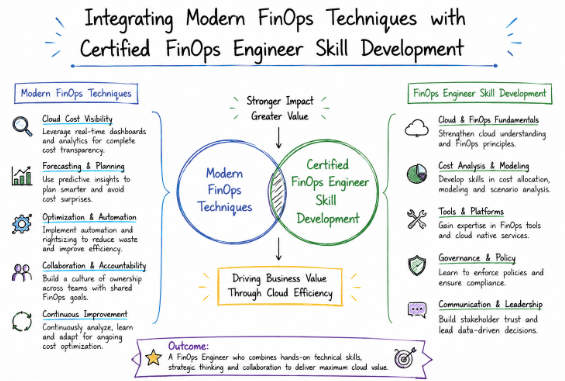
In the modern digital economy, cloud computing has transitioned from a flexible infrastructure option to the largest operational expense for global enterprises. While cloud platforms enable engineering teams to deploy services at lightning speed, they also introduce unprecedented financial risk. Without structural guardrails, automated scaling can rapidly inflate infrastructure costs.
Because of this paradigm shift, engineering accountability can no longer be limited to uptime and performance metrics alone. Financial engineering, or the practice of managing cloud unit economics alongside system availability, has emerged as a mandatory competency. The Certified FinOps Engineer credential provides technical professionals with a clear framework to bridge the historical gap between software deployment and corporate financial governance.
What is Certified FinOps Engineer
The Certified FinOps Engineer is an advanced professional validation that certifies an individual’s capability to implement financial governance directly within cloud native architectures. This technical program moves past generic high-level cost recommendations and focuses specifically on the programmatic enforcement of spending efficiency. It equips professionals to manage cloud resources through a combination of automated tagging, programmatic cost tracking, and precise resource lifecycle configuration.
Holding this qualification indicates that a technical specialist possesses the skills required to convert complex, unstructured billing data into actionable architectural adjustments. The curriculum ensures that engineering decisions are guided by financial transparency, allowing development teams to optimize production environments without reducing speed or system reliability.
Why it matters today?
Modern infrastructure relies heavily on automated provisioning systems, container orchestration, and on-demand microservices. While these technologies drive rapid product iteration, they make it incredibly easy for idle or oversized resources to run undetected, resulting in massive cloud waste.
Organizations across both Indian and global markets are actively shifting away from reactive quarterly cost reviews toward proactive, real-time financial tracking. Having dedicated specialists who understand how to control infrastructure spend ensures that engineering scalability directly supports corporate profitability rather than draining operational budgets.
Why Certified FinOps Engineer certifications are important
Most legacy IT certifications evaluate a professional’s ability to configure, secure, or deploy individual cloud services, completely ignoring the long-term financial consequences of those design choices. This specific certification is important because it establishes a standardized, cross-departmental operational language that connects engineering, finance, and procurement teams together.
It provides immense career longevity because the underlying principles—such as cost transparency, precise resource allocation, and continuous optimization—remain highly relevant regardless of how public cloud provider pricing models evolve over time. It signals to enterprise employers that an engineer possesses a business-centric architectural mindset.
Why choose Finopsschool?
Finopsschool stands out as a premier educational platform entirely focused on the discipline of cloud financial operations and governance. The learning tracks provided by the institution are meticulously designed by seasoned industry practitioners to ensure the technical concepts align directly with actual enterprise infrastructure challenges.
The curriculum prioritizes hands-on experience, utilizing dedicated sandbox environments where students interact with large-scale, multi-cloud billing datasets to learn practical analytics. By maintaining rigorous evaluation standards, it ensures that its graduates are fully capable of deploying enterprise-wide cost optimization frameworks immediately upon receiving their credentials.
Certification Deep-Dive
What is this certification?
This certification is a highly technical validation program designed to verify an engineer’s capability to build automated cost visibility pipelines, orchestrate cloud optimization strategies, and enforce resource allocation governance across distributed enterprise systems.
Who should take this certification?
This qualification is engineered for DevOps Professionals, Site Reliability Engineers (SREs), Systems Architects, and Platform Engineers who are directly responsible for managing cloud infrastructure footprints. It is equally valuable for Engineering Managers and Technology Directors who oversee department-wide infrastructure budgets.
Certification Overview Table
| Track | Level | Who it’s for | Prerequisites | Skills Covered | Recommended Order |
| FinOps Track A | Foundational | Aspiring cloud professionals, support engineers | Basic cloud operating concepts | Cloud cost visibility, basic billing metrics, tagging principles | Step One |
| FinOps Track B | Associate | System administrators, network operators | Staging environment experience | Cost allocation methods, anomaly detection, resource rightsizing | Step Two |
| FinOps Track C | Professional | Active DevOps, SRE, and infrastructure leads | Multi-cloud operational experience | Automated pipeline cost checks, policy-as-code, KPI tracking | Step Three |
| FinOps Track D | Advanced | Solutions architects, engineering managers | Enterprise system management | Unit economics modeling, shared cost distribution, vendor negotiation | Step Four |
| FinOps Track E | Expert | Enterprise directors, cloud consultants | Multi-departmental leadership | Global governance frameworks, financial forecasting, cultural scaling | Step Five |
Skills you will gain
- Deep proficiency in managing the continuous lifecycle of cloud financial governance across the Inform, Optimize, and Operate phases.
- Expertise in configuring automated metadata tagging structures to ensure accurate resource tracking across global business units.
- Competency in analyzing and capitalizing on commitment-based discount models, including Reserved Instances and Savings Plans.
- Ability to architect real-time cloud spend monitoring dashboards that integrate directly with enterprise alerting mechanisms.
- Skill in writing and deploying automated serverless cleanup routines to eliminate idle or abandoned infrastructure components.
- Mastery of complex cost-attribution strategies, specifically involving containerized workloads and shared multi-tenant cluster environments.
Real-world projects you should be able to do after this certification
- Multi-Cloud Cost Aggregator Pipeline: Build an automated system that extracts billing telemetry from multiple cloud providers, normalizes the data, and visualizes it inside a single enterprise dashboard.
- Pod-Level Kubernetes Cost Tracker: Configure native cloud-native telemetry utilities to monitor resource consumption down to the individual microservice namespace and map expenses accurately to specific development teams.
- Serverless Automated Remediator: Program an automated serverless workflow that detects non-production virtual machines running outside of business hours and gracefully powers them down to preserve budget.
- Tagging Compliance Policy Engine: Deploy a policy-as-code framework within your infrastructure deployment pipelines to block any deployment that fails to meet organizational tagging requirements.
Preparation plan
7–14 days plan
Focus your entire attention on mastering the baseline terminology, core operational metrics, and organizational personas defined in the syllabus. Spend time analyzing standard cloud billing structures, studying the differences between fixed and variable pricing models, and understanding how cloud spending impacts corporate balance sheets.
30 days plan
Engage deeply with the official training videos and complete all accompanying laboratory configurations. Practice setting up cloud budget alerts, running basic resource optimization assessments on staging environments, and learning how to query cloud billing metadata via official command-line interfaces.
60 days plan
Design and run a full cost-optimization project on a dedicated sandbox account. Focus heavily on configuring automated cleanup rules, resolving complex shared-resource allocation scenarios, and building custom cost visibility reports. Dedicate the final week to completing mock examinations to ensure exam readiness.
Common mistakes to avoid
- Relying solely on reading documentation: Attempting to pass the evaluation by memorizing structural terms instead of spending adequate time configuring optimization tools in real lab environments.
- Treating cost optimization as a one-off task: Assuming FinOps is an isolated engineering cleanup sprint rather than a continuous operational culture that must be embedded into daily workflows.
- Ignoring the business and financial context: Focusing exclusively on cutting costs down without considering how architectural adjustments might impact system performance, user experience, or service availability.
Best next certification after this
- Same track: Certified FinOps Engineer – Advanced level to master deep financial forecasting, long-term commitment planning, and enterprise-wide unit economic strategies.
- Cross-track: Certified Site Reliability Engineer (SRE) to perfectly balance cloud infrastructure availability requirements with financial efficiency targets.
- Leadership / management: Certified Cloud Governance Specialist to transition into strategic multi-departmental leadership, vendor portfolio management, and corporate budget management.
Choose Your Learning Path
DevOps Path
This pathway is designed for automation specialists who aim to insert cost-checking mechanisms directly into continuous delivery models. It ensures that infrastructure deployment manifests are analyzed for their financial impact automatically before being pushed into production environments.
DevSecOps Path
This track bridges the gap between security compliance requirements, corporate governance, and infrastructure costs. Engineers learn how mandatory security configurations, such as deep log retention or extensive data encryption, affect spending and how to automate these protections efficiently.
Site Reliability Engineering (SRE) Path
This branch focuses on defining the exact financial trade-offs required to maintain enterprise system reliability. Professionals learn how to calibrate error budgets, multi-region high availability architectures, and automated disaster recovery options against cloud budgets.
AIOps / MLOps Path
This path targets the heavy operational costs associated with hosting artificial intelligence platforms and machine learning pipelines. It highlights strategies for optimizing compute cluster allocations, managing GPU scheduling, and reducing the expense of massive model training operations.
DataOps Path
A specialized track centered on controlling the expenses driven by modern enterprise big data platforms, large-scale warehouses, and real-time processing networks. It covers techniques for minimizing data transfer fees, optimizing complex analytical queries, and setting up automated storage retention rules.
FinOps Path
The direct, focused pathway for professionals who intend to specialize completely in cloud financial management as a career. It builds total mastery across cost tracking, data analysis, cloud budget forecasting, and driving cross-departmental financial accountability.
Role → Recommended Certifications Mapping
| Current Professional Role | Primary Recommended Certification | Secondary Strategic Path | Focus Area |
| DevOps Engineer | Certified FinOps Engineer – Associate | DevOps Specialist Certification | Cost-aware delivery pipelines |
| Site Reliability Engineer | Certified FinOps Engineer – Associate | SRE Expert Certification | Availability vs. budget balance |
| Platform Engineer | Certified FinOps Engineer – Professional | Cloud Architecture Track | Internal governance platform design |
| Cloud Engineer | Certified FinOps Engineer – Foundational | Cloud Operations Track | Basic infrastructure waste elimination |
| Security Engineer | Certified FinOps Engineer – Foundational | DevSecOps Infrastructure Track | Cost-optimized compliance logging |
| Data Engineer | Certified FinOps Engineer – Associate | DataOps Framework Track | Query execution and storage optimization |
| FinOps Practitioner | Certified FinOps Engineer – Professional | Cloud Governance Frameworks | Enterprise unit economics tracking |
| Engineering Manager | Certified FinOps Engineer – Professional | Strategic Leadership Track | Cross-departmental budget accountability |
Next Certifications to Take
One same-track certification
The Certified FinOps Engineer – Advanced level is tailored to deepen an engineer’s command over enterprise-scale cloud unit economics, long-term cross-provider forecasting models, and the establishment of corporate FinOps practices.
One cross-track certification
The Certified SRE Engineer program allows cloud practitioners to effectively blend infrastructure resilience, automated incident monitoring, and system uptime targets with programmatic cost-control principles.
One leadership-focused certification
The Certified Cloud Governance Manager qualification provides technology leaders with the framework necessary to direct multi-departmental cultural transformations, manage enterprise vendor relationships, and enforce global corporate compliance structures.
Training & Certification Support Institutions
DevOpsSchool
This training institution is highly regarded for delivering practical, production-aligned education across cloud computing, automated pipelines, and infrastructure management fields. Extensive live training programs and immersive lab configurations are provided to help working professionals transition into cloud financial tracking roles smoothly.
Cotocus
Specialized corporate upskilling programs and advanced engineering consultation frameworks are delivered globally by this training provider. Hands-on expertise in automation tools, deep cost attribution methods, and modern architecture patterns are built using their comprehensive scenario-driven courses.
ScmGalaxy
A prominent technology community hub and knowledge platform that shares extensive educational guides, expert articles, and career path blueprints. Detailed learning roadmaps are regularly provided to assist system engineers in mastering modern infrastructure optimization strategies.
BestDevOps
Focused heavily on practical execution plans, this technical training platform offers targeted, modular coursework tailored for specialized IT certifications. Step-by-step guidance and mentor-led laboratory assistance are delivered to ensure infrastructure optimization concepts are learned easily.
devsecopsschool.com
An educational platform dedicated completely to training professionals on embedding security mechanisms directly into automated code delivery pipelines. Structured learning tracks are provided to help engineers design automated compliance checks that do not slow down software releases.
sreschool.com
Practical coursework and industry-aligned training structures focused explicitly on systems resilience and site reliability principles are hosted here. Infrastructure observability, automated alerting systems, and systemic incident management patterns are explored systematically.
aiopsschool.com
This online training provider specializes in teaching professionals how to apply machine learning algorithms and advanced automation to infrastructure monitoring data. Predictive capacity management, automated anomaly tracking, and algorithmic system scaling are emphasized across their courses.
dataopsschool.com
Comprehensive technical training programs engineered to address the complexities of enterprise big data orchestration, pipeline maintenance, and cloud storage systems are delivered by this platform. Query efficiency and data transfer cost control are prioritized within their curriculum.
finopsschool.com
The primary authority and official training venue for the Certified FinOps Engineer qualification lifecycle. Comprehensive instructional materials, community forums, and rigorous assessment systems are offered to establish international educational excellence in cloud financial operations.
FAQs Section
FAQ 1: What is the general difficulty level of the Certified FinOps Engineer exam?
The examination is considered moderately advanced because it tests a combination of foundational cost-management theory and practical, real-world scenario analysis. Solid exposure to cloud infrastructure administration is highly advantageous for clear success.
FAQ 2: How much study time is typically required to pass the program?
For professionals who currently handle cloud operations daily, a period of 30 to 45 days of consistent study is usually sufficient. Candidates without an existing technical background may require up to 60 days to build baseline cloud literacy first.
FAQ 3: Are there any mandatory prerequisites before enrolling?
No strict professional prerequisites are enforced for entering the foundational program, though basic familiarity with cloud environments is highly recommended. The advanced levels require a clear understanding of complex cloud billing logs and multi-service environments.
FAQ 4: What is the recommended certification sequence?
Learners should ideally begin with the Foundational level to master the standardized terminology, advance to the Associate level for technical optimization tactics, and ultimately complete the Professional track to lead enterprise governance initiatives.
FAQ 5: What long-term career value does this credential deliver?
Exceptional market differentiation is achieved by certified individuals, as companies globally focus on curbing uncontrolled cloud budgets. It transitions traditional system administrators into high-value strategic assets capable of proving direct business value.
FAQ 6: Which job roles can be pursued after obtaining this certificate?
Graduates can successfully move into roles such as Cloud FinOps Engineer, Infrastructure Cost Analyst, Enterprise Cloud Governance Lead, Platform Optimization Architect, or FinOps Consultant.
FAQ 7: How does this qualification impact professional growth in India?
The rapid expansion of major cloud development hubs within the Indian IT market has created a massive demand for localized cost-governance professionals. This credential provides clear acceleration into senior infrastructure leadership and technical management roles.
FAQ 8: Is recertification required over time?
Yes, the certification remains active for a period of two years, after which a continuing education assessment must be completed to ensure compliance with modern cloud financial optimization practices.
FAQ 9: Are multi-cloud billing systems covered in the curriculum?
Yes, the underlying operational frameworks are kept completely provider-agnostic, meaning that the cost allocation and governance strategies can be applied across AWS, Microsoft Azure, and Google Cloud Platform simultaneously.
FAQ 10: Is coding required for the professional and advanced tracks?
Basic scripting competency is highly beneficial, as the technical execution modules involve analyzing billing API telemetry, setting up automated resource cleanups, and creating policy-as-code configurations.
FAQ 11: Does the training include live sandbox laboratory access?
Substantial training hours are spent inside simulated live cloud environments where billing details are parsed, tag compliance rules are implemented, and architectural inefficiencies are actively identified by the student.
FAQ 12: How does this program support containerized environments?
A deep focus is placed on container orchestration frameworks, teaching students how to track and distribute shared infrastructure costs accurately down to individual microservice namespaces, pod tags, and labels.
Additional Certified FinOps Engineer Questions
FAQ 1: What specific cost tracking phases are taught in this program?
The entire technical path is structured around the Inform, Optimize, and Operate framework phases to ensure full visibility and successful governance execution.
FAQ 2: Will I learn how to manage commitment-based savings plans?
Yes, extensive methodologies regarding the procurement, utilization tracking, and financial allocation of Reserved Instances and vendor savings programs are integrated into the course.
FAQ 3: How does this certification help engineering managers?
Strategic technological planning is enhanced as engineering leaders learn to utilize unit economics, allowing them to justify infrastructure expansions directly to executive financial stakeholders.
FAQ 4: What is the primary focus of the assessment system?
The official testing process moves completely away from basic definition memorization, using scenario-based troubleshooting questions to validate actual production readiness.
FAQ 5: How are shared infrastructure costs handled in the training?
Practical distribution formulas and architectural design patterns are taught to assist engineering teams in dividing non-allocatable overhead expenses fairly among multiple business units.
FAQ 6: Can this certification help reduce enterprise cloud waste immediately?
Yes, the immediate application of the system rightsizing rules, lifecycle automation routines, and scheduling strategies learned in the modules typically produces measurable cost improvements.
FAQ 7: Are forecasting techniques included in the advanced models?
Yes, trend-line data analysis, historical usage extrapolation, and growth-aligned budget forecasting models are thoroughly explored within the higher-level leadership segments.
FAQ 8: Is a community network provided after passing the exam?
Immediate entry into global practitioner forums is provided upon passing, enabling newly certified engineers to collaborate and share automation scripts and cost-governance strategies worldwide.
Testimonials
Rohan
A comprehensive understanding of cloud infrastructure cost distribution was achieved through this course. The automated optimization blueprints were deployed directly within our workflows, yielding immediate efficiency gains.
Kriti
Excellent career clarity was obtained after completing this specialized technical path. The precise balance between application performance targets and cloud spending is now maintained with total confidence.
Nitin
The lab exercises delivered incredible insight into complex container-level resource mapping. Our entire cloud governance framework was systematically updated based on the exact methodologies taught here.
Priya
A major advancement in professional confidence was felt during corporate infrastructure planning meetings. Technical designs are now successfully communicated to business leaders using a unified financial language.
Alok
The shift from an operational-only viewpoint to a strategic cost-governance mindset was made remarkably straightforward. Long-term corporate cloud deployments are now successfully driven with clear financial visibility.
Conclusion
The Certified FinOps Engineer credential has established itself as an essential career pillar for modern cloud infrastructure, DevOps, and systems engineering specialists. True technical excellence requires balancing rapid system scalability with precise financial discipline, and this certification delivers the exact tools and workflows needed to achieve that balance. Long-term professional security is gained by demonstrating a clear ability to align technical deployments with business profitability. Strategic upskilling within this domain should be considered a priority to remain highly competitive in today’s cost-conscious global technology sector.
