
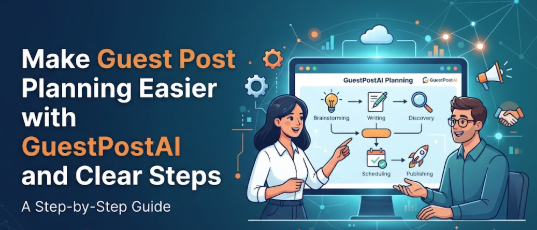
Building brand authority and reaching new audiences through digital channels has always required consistent effort. Among the many content marketing strategies available today, publishing guest posts on established websites remains one of the most effective ways to share expertise, connect with target readers, and build long-term online visibility. However, executing a successful campaign involves far more than just writing an article and emailing a website owner.
Traditional guest blogging often turns into an overwhelming process. Marketers, agency owners, and bloggers frequently find themselves juggling dozens of disconnected tools—using separate applications for keyword research, document writing, image creation, publisher outreach, payment tracking, and campaign organization. As campaigns expand, managing these fragmented tasks through spreadsheets and long email threads becomes inefficient and prone to error.
To solve these operational bottlenecks, content marketing relies increasingly on centralized, platform-driven workflows. Integrating artificially intelligent tools into content creation, asset generation, publisher discovery, and publishing schedules helps businesses streamline operations without sacrificing quality. GuestPostAI was developed to address these specific operational challenges, providing a unified platform that connects every stage of the guest posting process.
What is GuestPostAI?
GuestPostAI is a centralized platform designed to streamline, manage, and scale guest posting campaigns. Rather than replacing human oversight, the platform provides an integrated environment where content creation, digital asset generation, publisher discovery, scheduling, and project management exist within a single ecosystem.
The core vision behind GuestPostAI is to eliminate the friction inherent in traditional publishing workflows. Historically, a content team had to write a draft in one application, design featured graphics in another, manually search the web for relevant blogs, pitch publishers via email, track approvals in spreadsheets, and process payments across multiple gateways. GuestPostAI replaces this piecemeal approach by combining all these activities into one cohesive interface.
By bringing content buyers and publishers together within a unified marketplace, the platform simplifies how campaigns are planned, executed, and monitored. It addresses common pain points such as disjointed communications, unorganized drafts, inconsistent formatting, and delayed publishing schedules, allowing users to execute structured campaigns efficiently.
Why Traditional Guest Posting Can Be Time-Consuming
Executing a manual guest posting campaign involves numerous operational steps that consume significant time and resources:
- Manual Website Discovery: Browsing the web for hours to find relevant websites that accept guest contributions, verifying their publication standards, and locating contact information.
- Drafting Content from Scratch: Writing custom articles individually, which often creates bottlenecks when scaling campaigns across multiple topics.
- Managing Freelancers: Coordinating with external writers, graphic designers, and outreach specialists across different time zones and communication channels.
- Asset Creation: Designing featured images, charts, or social media previews using external graphics software.
- Publisher Outreach: Sending cold emails, following up repeatedly, and tracking responses across disorganized email threads.
- Spreadsheet Overhead: Maintaining complex spreadsheets to track pitched topics, draft statuses, publisher responses, live URLs, and publishing costs.
- Monitoring Deadlines: Manually tracking expected publication dates and following up when content is delayed.
When managing multiple campaigns simultaneously, these manual steps compound rapidly. Centralizing these disparate activities within a dedicated workflow platform significantly reduces administrative overhead and frees teams to focus on strategy and editorial quality.
Why AI is Changing Guest Posting Workflows
Artificial intelligence is reshaping how digital content is planned, created, and distributed. In the context of guest posting, AI tools go far beyond simple text generation—they enhance operational efficiency across the entire lifecycle of a campaign.
       ┌─────────────────────────────────────────────────────────────┐
       │                   Traditional Workflow                      │
       └─────────────────────────────────────────────────────────────┘
                                      │
   ┌──────────────┬──────────────┬────┴─────────┬──────────────┬──────────────┐
   ▼              ▼              ▼              ▼              ▼              ▼
Discovery     Outreach      Drafting        Design         Emails      Spreadsheets
(Manual Search)(Cold Emails) (From Scratch) (External Tools)(Follow-ups) (Manual Tracking)

─────────────────────────────────────────────────────────────────────────────────

       ┌─────────────────────────────────────────────────────────────┐
       │             Unified Workflow (GuestPostAI)                  │
       └─────────────────────────────────────────────────────────────┘
                                      │
                                      ▼
             ┌─────────────────────────────────────────────────┐
             │  • Unified Website Search & Discovery           │
             │  • Prompt-Based Content & Image Generation      │
             │  • Integrated Editing & Custom Templates        │
             │  • Direct Scheduling & Automated Tracking       │
             └─────────────────────────────────────────────────┘
- Accelerated Content Drafting: AI tools assist writers by quickly generating structured outlines, expansion ideas, and initial drafts based on specific prompts, drastically reducing the time needed to move from concept to complete draft.
- Editorial Consistency: AI-powered templates ensure that content structure, formatting, tone, and guidelines remain uniform across diverse publishing channels.
- Asset Integration: Generating topic-appropriate featured images directly within the writing workspace eliminates the need to context-switch to separate design software.
- Centralized Campaign Execution: By connecting content generation directly with publisher discovery and scheduling, AI-driven platforms minimize data transfer between disparate applications.
Who Should Use GuestPostAI?
Different organizations face distinct content management challenges. Here is how various user groups utilize GuestPostAI to solve operational bottlenecks:
Bloggers
- Challenges: Managing content creation alongside publisher outreach, graphic design, and publishing timelines without a dedicated support team.
- How GuestPostAI Helps: Offers an all-in-one workspace where independent creators can draft articles, generate featured images, find relevant blogs, and track submissions.
- Workflow Benefits: Saves time on administrative tasks, allowing bloggers to produce more high-quality content and build industry relationships.
SEO Professionals
- Challenges: Scaling content placement across relevant domains while maintaining strict quality control and tracking publication status across clients.
- How GuestPostAI Helps: Provides a structured guest post marketplace with granular filtering options, organized campaign management, and live order tracking.
- Workflow Benefits: Streamlines outreach and placement workflows, ensuring consistent campaign delivery for client accounts.
Digital Marketing Agencies
- Challenges: Coordinating large volumes of content across multiple client accounts, writers, editors, and publishers simultaneously.
- How GuestPostAI Helps: Features role-based access control, reusable editorial templates, multi-project organization, and centralized payment management.
- Workflow Benefits: Eliminates spreadsheet clutter, improves cross-team collaboration, and provides clear visibility into campaign status across all accounts.
Content Writers & Freelancers
- Challenges: Meeting tight deadlines, maintaining consistent formatting, and creating visual assets for client submissions.
- How GuestPostAI Helps: Uses prompt-based content generation, integrated drafting tools, and direct image creation to speed up production.
- Workflow Benefits: Allows writers to focus on high-level strategy, editing, and voice refining while automated tools handle formatting and preliminary drafting.
Content Marketing Teams
- Challenges: Maintaining steady publishing frequency and keeping brand messaging consistent across external blogs.
- How GuestPostAI Helps: Enables centralized template management, draft reviews, and unified publishing calendars.
- Workflow Benefits: Ensures all team members produce content aligned with overall brand guidelines and publication timelines.
Marketing Managers
- Challenges: Overseeing campaign budgets, tracking execution performance, and managing approvals across internal and external teams.
- How GuestPostAI Helps: Consolidates reporting, activity logs, budget management, and campaign tracking into a single dashboard.
- Workflow Benefits: Simplifies performance monitoring and provides full visibility into resource allocation and publishing schedules.
Startups
- Challenges: Establishing online domain presence quickly with limited team bandwidth and constrained operational budgets.
- How GuestPostAI Helps: Delivers an efficient, self-contained workflow that eliminates the need to subscribe to multiple separate content and outreach software packages.
- Workflow Benefits: Maximize output with lean teams, accelerating brand presence across target market channels.
SaaS Companies
- Challenges: Educating niche software users through consistent technical articles published across industry blogs.
- How GuestPostAI Helps: Connects SaaS marketers with categorized tech publishers and provides prompt-based drafting to explain software concepts clearly.
- Workflow Benefits: Establishes thought leadership and features educational content on relevant software platforms.
eCommerce Businesses
- Challenges: Securing product feature mentions, lifestyle content placements, and buyer guides across diverse retail platforms.
- How GuestPostAI Helps: Offers specialized website filtering by category, enabling store owners to identify relevant shopping and lifestyle sites.
- Workflow Benefits: Accelerates product awareness campaigns through structured and targeted outreach.
Small Businesses
- Challenges: Lack of dedicated digital marketing personnel to handle manual outreach, writing, and follow-ups.
- How GuestPostAI Helps: Provides guided workflows and structured steps that make guest post publishing accessible without specialized technical teams.
- Workflow Benefits: Enables local and regional businesses to build online footprint systematically without hiring large agencies.
Enterprise Marketing Teams
- Challenges: Enforcing governance, security standards, and workflow consistency across global regional teams and external agency partners.
- How GuestPostAI Helps: Features robust role-based permissions, draft control, activity histories, and standardized content templates.
- Workflow Benefits: Protects brand integrity while scaling publication output across international markets.
PR Agencies
- Challenges: Securing timely media placements, article contributions, and executive thought leadership columns.
- How GuestPostAI Helps: Combines instant and scheduled publishing features with direct publisher connections for reliable press execution.
- Workflow Benefits: Ensures media relations campaigns move from concept to publication without administrative delays.
Link Building Specialists
- Challenges: Finding relevant target domains, avoiding duplicate submissions, and keeping detailed records of live placements.
- How GuestPostAI Helps: Incorporates advanced website discovery filters, campaign tracking tools, and complete order history logs.
- Workflow Benefits: Maintains organized databases of target websites while tracking campaign execution in real time.
Brand Managers
- Challenges: Preserving brand tone, preventing improper image usage, and ensuring approved messaging on external websites.
- How GuestPostAI Helps: Provides centralized template controls, built-in image generators, and editorial preview options prior to submission.
- Workflow Benefits: Guarantees that every article published reflects brand guidelines accurately.
Website Owners & Publishers
- Challenges: Sourcing reliable, well-formatted guest content that adheres to site guidelines while managing author requests manually.
- How GuestPostAI Helps: Serves as a structured intake portal where publishers receive organized submission requests, review drafts, and manage publishing schedules.
- Workflow Benefits: Reduces editorial overhead, organizes inbound content pipelines, and maintains site quality standards.
Influencers & Industry Experts
- Challenges: Sharing insights across multiple industry channels without spending hours on pitch emails and administrative back-and-forth.
- How GuestPostAI Helps: Streamlines content preparation and platform discovery into a single dashboard.
- Workflow Benefits: Amplifies reach and personal brand presence across recognized digital publications with minimal operational effort.
Educational Institutions
- Challenges: Distributing research, academic programs, and expert insights across educational blogs and news portals.
- How GuestPostAI Helps: Facilitates clear subject-matter drafting using content templates and targeted niche discovery tools.
- Workflow Benefits: Efficiently disseminates institutional insights to prospective students, academics, and industry partners.
Non-Profit Organizations
- Challenges: Spreading awareness about causes and social campaigns on tight operational budgets and limited personnel.
- How GuestPostAI Helps: Provides accessible, cost-effective workflow tools that simplify content production and publisher connection.
- Workflow Benefits: Maximizes outreach efficiency, helping advocacy groups share stories and campaign updates broadly.
Growing Businesses
- Challenges: Transitioning from sporadic, manual marketing efforts to structured, predictable digital campaigns.
- How GuestPostAI Helps: Offers scalable infrastructure that grows alongside business needs—from individual posts to multi-brand execution.
- Workflow Benefits: Standardizes marketing operations, allowing growing companies to maintain momentum as campaigns scale.
Core Features of GuestPostAI
GuestPostAI incorporates a wide array of tools designed to support each phase of the guest posting workflow:
AI Guest Post Generator
The AI Guest Post Generator produces comprehensive, well-structured article drafts based on user-defined topics, keywords, and tone requirements. Instead of generating generic text, it structures articles logically with appropriate headings, introductions, and conclusions tailored to guest blogging standards.
AI Image Generation
Visual appeal is critical for accepted guest contributions. The built-in AI image generation tool creates customized featured graphics and inline images directly within the article creation environment, eliminating the need for stock photo searches or third-party graphic design software.
AI Content Templates
To maintain consistent formatting and style across different publications, GuestPostAI provides reusable content templates. Users can save pre-configured structures—such as how-to guides, case studies, or opinion pieces—ensuring quick and consistent article setup.
Prompt-Based Content Creation
The platform allows content creators to enter custom prompts, instructions, and specific guidelines to tailor the text. This feature ensures that unique brand viewpoints, product nuances, or stylistic preferences are accurately reflected in the draft.
Content Editing
A full-featured text editor integrated directly within the platform allows writers and editors to adjust content, refine headings, insert hyperlinking structures, and fine-tune tone before submitting articles to publishers.
Draft Management
Organize all pending, active, and completed articles in one central dashboard. Draft management features allow users to keep track of content versions, pending revisions, and approved articles without losing track of files across local drives.
Content Preview
Before sending a submission request to a publisher, users can view a accurate preview of how the post will look once formatted. This helps identify visual balance, formatting issues, or image placement adjustments beforehand.
Guest Post Marketplace
The built-in guest post marketplace connects buyers with a network of verified website owners and publishers. Users can browse available channels, view target audience categories, and initiate publishing requests directly.
Website Search
The platform features an intuitive website search engine that allows users to search for potential publishing partners using relevant keywords, topics, or industry sectors.
Website Filtering
Refine website selection using detailed criteria such as niche, category, submission guidelines, and turn-around times. This ensures that articles are submitted only to platforms that match campaign objectives.
Website Categories
Publishing targets are categorized across various industries, including technology, finance, health, lifestyle, business, marketing, and education, helping users find relevant outlets quickly.
Website Comparison
Users can compare multiple potential host websites side-by-side to evaluate their audience fit, publishing speed, requirements, and submission options before making a final selection.
Website Selection
Once an optimal site is selected, users can seamlessly assign their prepared draft directly to that publisher within the platform interface.
Publishing Requests
Submit content requests to host websites directly through GuestPostAI. Requests include complete draft details, attached visual assets, and specific publishing instructions, keeping communications clear and standardized.
Instant Publishing
For host websites that support automated integration, the platform enables quick content publication upon approval, minimizing waiting periods.
Scheduled Publishing
Plan campaigns ahead of time by selecting preferred publication dates and times. Scheduled publishing helps maintain a steady distribution pace across different media channels.
Publishing Calendar
A comprehensive visual publishing calendar displays upcoming, pending, and completed posts. This allows marketing teams to balance campaign releases and avoid cluster publishing.
Campaign Management
Manage complex multi-post strategies using project-level campaign management tools. Group articles by client, brand, product launch, or timeframe to keep operations organized.
Guest Post Project Management
Assign tasks, track completion milestones, and monitor deadlines for individual guest posting projects, ensuring that team members stay aligned.
Website Management
For publishers and site owners, website management features make it easy to list target domains, update posting guidelines, set review criteria, and manage inbound submission requests smoothly.
Publisher Management
Allows agency owners and buyers to organize their relationships with preferred publishing partners, review submission history, and maintain direct contact records.
Role-Based Access
Enterprise teams and agencies can assign custom roles and permissions to team members—such as writer, editor, manager, or client reviewer—ensuring appropriate control over sensitive campaign settings.
Content Version Management
Track changes, compare edits, and restore previous versions of article drafts. Version control ensures transparency across collaborative editing cycles.
Payment Management
Centralized payment processing handles platform transactions securely, simplifying billing for buyers and ensuring prompt compensation tracking for publishers.
Order Tracking
Real-time order tracking provides complete visibility into submission status—from initial request and publisher review to draft approval and live URL confirmation.
Activity History
Detailed audit logs capture every event in the campaign lifecycle, including draft modifications, submission times, publisher notes, and approval status changes.
Team Collaboration
In-app commentary, review tags, and notification systems enable writers, editors, and strategists to collaborate within the platform without relying on external messaging tools.
Workflow Management
Standardize your campaign production steps—from topic idea to final publication—using guided workflows that prevent skipped steps and maintain execution standards.
Reusable Templates
Save effective content outlines, outreach messages, and review checklists as templates for future campaigns, accelerating repeat processes across projects.
Editorial Control
Ensure that all content undergoes internal review and sign-off before being transmitted to external publishers, protecting quality standards and brand voice.
Reporting & Campaign Monitoring
Track key metrics such as published post count, processing speed, campaign completion rates, and historical logs to assess overall workflow efficiency.
Step-by-Step Guide to Using GuestPostAI
Executing a guest posting campaign through GuestPostAI follows a simple, structured process:
Step 1: Topic Selection ➔ Step 2: AI Draft Generation ➔ Step 3: Review & Edit
Step 6: Website Search Step 5: Apply Template Step 4: Generate Image
│
▼
Step 7: Compare Websites ➔ Step 8: Select Publisher ➔ Step 9: Submit Request
Step 12: Campaign Monitoring Step 11: Payment & Order Step 10: Schedule / Instant
- Step 1 – Choose a Guest Post Topic: Identify a relevant topic aligned with your expertise and the interests of your target audience.
- Step 2 – Generate AI Content: Input your topic, target keywords, and core guidelines into the AI Guest Post Generator to create a comprehensive initial draft.
- Step 3 – Review and Edit the Article: Refine the draft in the built-in editor. Adjust tone, insert unique examples, format headings, and add specific brand perspectives.
- Step 4 – Generate a Featured Image: Use the integrated AI image generation tool to create a visual asset suited to the topic.
- Step 5 – Select a Reusable Template: Apply a pre-formatted structure or style template to ensure the post aligns with platform presentation standards.
- Step 6 – Search for Suitable Publishing Websites: Use the marketplace search engine to discover domain targets across relevant industry categories.
- Step 7 – Compare Available Websites: Evaluate candidate sites based on audience focus, publishing criteria, and turn-around speed.
- Step 8 – Select a Publisher: Choose the host website that best fits your campaign objectives.
- Step 9 – Submit the Publication Request: Send your finalized draft, featured images, and posting guidelines directly to the publisher through the platform.
- Step 10 – Choose Immediate or Scheduled Publishing: Indicate whether the post should go live immediately upon publisher approval or be scheduled for a future date.
- Step 11 – Complete Payment: Process the publishing transaction securely through the platform’s unified payment management system.
- Step 12 – Track Campaign Progress: Monitor order progress via the dashboard until the live post URL is provided and logged in your campaign history.
How Different Teams Can Collaborate Using GuestPostAI
Successful digital marketing requires seamless coordination between multiple specialists. GuestPostAI acts as a centralized workspace that improves cross-functional teamwork:
- SEO Teams & Content Teams: SEO specialists identify keyword priorities and strategic topics within the platform, while content writers create and refine drafts directly against those guidelines.
- Editors & Writers: Editors review AI-assisted drafts, refine tone, enforce brand guidelines, and leave feedback within the interface before approving submissions.
- Outreach Teams & Managers: Outreach specialists identify target sites in the marketplace and submit requests, while project managers monitor campaign status, budgets, and execution timelines in real time.
- Marketing Teams & Publishers: Internal teams communicate directly with external website publishers through standardized submission tools, removing the back-and-forth of email exchanges.
Centralizing these interactions prevents miscommunication, lost document versions, and missed deadlines.
How GuestPostAI Supports Different Marketing Goals
GuestPostAI supports a wide range of content marketing and communication strategies:
- Content Marketing: Accelerates content production and distribution, ensuring brand stories reach audiences consistently across multiple external channels.
- Thought Leadership: Enables executives and industry experts to publish detailed opinion pieces and insightful guides on respected industry portals easily.
- Brand Awareness: Helps expanding companies introduce their solutions to new audiences by maintaining an active publishing presence on target niche blogs.
- SEO Campaigns: Supports search marketing by streamlining content placement across contextually relevant domains, helping build digital footprints organically.
- Link Building: Simplifies discovery and outreach for link-building specialists, ensuring content placements align with strategic guidelines.
- PR Campaigns: Complements public relations initiatives by simplifying the placement of official announcements, commentary, and guest columns.
- Product Launch Campaigns: Coordinates multi-site product launch announcements on scheduled publishing dates for maximum impact.
- Educational Content Distribution: Helps companies share tutorial guides, research summaries, and educational materials across specialized publishing channels.
- Authority Building: Standardizes publication efforts over time, establishing long-term credibility in competitive markets.
Real Business Use Cases
Scenario 1: Independent Blogger
- Challenge: An independent technology blogger wanted to guest post on larger industry blogs but spent over 15 hours a week managing manual outreach, draft formatting, and email follow-ups.
- Solution: The blogger used GuestPostAI to generate draft outlines, design article images, and identify suitable tech blogs through the platform marketplace.
- Practical Outcome: Administrative workload dropped significantly, enabling the blogger to publish three guest contributions per month while maintaining regular content on their own site.
Scenario 2: Early-Stage Startup
- Challenge: A boot-strapped fintech startup needed to establish online authority quickly but lacked the budget to hire a dedicated PR agency or large content team.
- Solution: Using the platform’s AI content generator and prompt-based editing, the founders prepared educational finance articles and submitted them directly to niche business blogs.
- Practical Outcome: The startup built a multi-site content presence within 60 days without overspending on agency retainers.
Scenario 3: B2B SaaS Company
- Challenge: A software company launching a new project management tool needed to publish ten guest articles across productivity blogs on launch day, but struggled to coordinate timelines manually.
- Solution: The team drafted articles using customized SaaS templates, arranged placements with target publishers in the marketplace, and utilized the scheduled publishing feature.
- Practical Outcome: All ten articles were approved and published within a 48-hour launch window, driving target traffic to the product announcement.
Scenario 4: Digital Marketing Agency
- Challenge: A digital marketing agency managing 15 client accounts struggled with unorganized client spreadsheets, lost email threads, and inconsistent article quality across writers.
- Solution: The agency adopted GuestPostAI, utilizing role-based access for writers and editors, reusable client templates, and centralized order tracking.
- Practical Outcome: Agency operational capacity increased by 40%, allowing them to serve more clients without adding administrative staff.
Scenario 5: Enterprise Corporate Brand
- Challenge: A global enterprise needed to ensure all external content published by regional marketing teams complied strictly with corporate messaging rules and design guidelines.
- Solution: Corporate administrators established standardized AI content templates, required internal editorial review within the platform, and maintained central payment management.
- Practical Outcome: Regional teams executed localized campaigns smoothly while maintaining 100% compliance with corporate brand governance.
Scenario 6: Digital Content Publisher
- Challenge: A high-traffic lifestyle blog received dozens of disorganized guest post pitches daily via email, many of which lacked proper images or formatting.
- Solution: The publisher listed their site on GuestPostAI, directing all guest contributors to submit pre-formatted drafts and visual assets through the platform intake portal.
- Practical Outcome: Editorial review time was cut in half, and incoming article quality improved substantially.
Scenario 7: Executive Personal Brand
- Challenge: An industry consultant wanted to publish executive commentary on leading leadership blogs but lacked the time to write 2,000-word articles from scratch.
- Solution: The consultant used prompt-based content generation to outline core ideas, refined the text using the platform editor, and scheduled posts across target management portals.
- Practical Outcome: Maintained a monthly executive presence on key industry blogs with less than two hours of direct effort per article.
Scenario 8: Educational Organization
- Challenge: A professional training institute wanted to share industry skill reports across career development websites but found manual outreach slow and difficult to track.
- Solution: The marketing team utilized website categories to find career and education portals, submitting structured research articles through the platform request system.
- Practical Outcome: Secured regular research features across relevant educational portals, expanding course inquiry volume.
Common Mistakes to Avoid in Guest Posting
Even with advanced platform workflows, avoiding common execution errors is critical for optimal results:
- Choosing Irrelevant Websites: Publishing on sites that do not align with your niche yields low engagement. Focus on contextual relevance over general domain metrics.
- Publishing AI Content Without Review: Never publish AI-generated drafts without human review. Always edit content to add unique insights, verified facts, and brand voice.
- Ignoring Editorial Guidelines: Host websites have specific formatting, length, and topic rules. Review publisher guidelines carefully before submitting.
- Poor Campaign Planning: Submitting articles sporadically leads to inconsistent results. Use publishing calendars to structure release schedules.
- Weak Scheduling: Publishing multiple articles on the exact same day across similar sites can look unnatural. Space out submission dates.
- Inconsistent Templates: Switching formatting styles across articles harms brand recognition. Maintain consistent structures using standard templates.
- Managing Everything Manually: Relying on separate spreadsheets, external drives, and manual emails increases operational complexity. Centralize your workflow.
- Publishing Duplicate Content: Submitting identical or near-identical articles to multiple sites damages credibility. Ensure every piece is unique.
- Selecting Websites Only by Traffic: High traffic numbers do not guarantee an engaged target audience. Prioritize audience quality and niche alignment.
- Ignoring Audience Relevance: Writing content that serves promotional goals rather than providing real value to the reader leads to rejected submissions.
Tips for Better Guest Posting Workflows
To get the most out of your campaigns, follow these practical workflow recommendations:
- Always Review AI-Generated Content: Use AI tools to generate initial drafts and outlines, but rely on human editing to add tone, real-world examples, and final polish.
- Customize Pre-Built Templates: Adapt reusable templates to reflect your brand’s specific style, heading preferences, and structural guidelines.
- Prioritize Audience Alignment: Select host websites whose readers genuinely match your ideal buyer or target community.
- Schedule Campaigns in Advance: Use visual publishing calendars to map out monthly content releases and avoid last-minute rushing.
- Maintain Consistent Brand Voice: Ensure all contributors use approved terminology, style rules, and asset guidelines across every submission.
- Group Assets by Project: Organize drafts, graphics, and publisher lists into dedicated project folders for clear oversight.
- Track Execution Performance: Review order completion speeds, host acceptance rates, and workflow milestones to refine future campaigns.
- Keep Published Content Updated: Periodically review live guest posts and coordinate with publishers to update outdated information or links.
How GuestPostAI Fits Into a Modern Content Marketing Workflow
Modern content marketing requires speed, organization, and consistency. GuestPostAI integrates every stage of the publishing cycle into a single operational hub:
[ Topic Planning ] ➔ [ AI Draft Generation ] ➔ [ Asset Creation ] ➔ [ Editorial Review ]
│
[ Performance Monitoring ] [ Live Publishing ] [ Publisher Selection ] ─┘
- Strategy & Planning: Marketers define campaign goals, target niches, and key topics inside project dashboards.
- Content & Asset Creation: The AI Guest Post Generator creates detailed drafts, while the built-in image generator produces matching featured graphics.
- Editorial Polish: Editors refine the text in the integrated editing suite, ensuring quality control and brand alignment.
- Target Selection: Users explore the guest post marketplace, filter sites by category and guidelines, and select appropriate host platforms.
- Execution & Tracking: Requests are submitted, payments are managed, and publication dates are tracked on a central calendar until live links are confirmed.
By unifying these functional steps, the platform eliminates operational fragmentation, helping teams execute high-volume campaigns smoothly.
Feature Overview & Practical Benefits
| GuestPostAI Features | Purpose | Practical Business Benefit |
|---|---|---|
| AI Guest Post Generator | Produces structured, topic-focused article drafts based on user prompts. | Accelerates drafting time and reduces writing bottlenecks. |
| AI Image Generation | Creates customized featured graphics and inline visuals within the workspace. | Saves costs on external graphic design tools and stock photos. |
| Guest Post Marketplace | Connects buyers directly with verified host website owners and publishers. | Streamlines discovery and replaces manual cold outreach emails. |
| Publishing Calendar | Provides a visual calendar view of scheduled and live article releases. | Ensures consistent campaign pacing and prevents publishing overlaps. |
| Centralized Order Tracking | Logs every submission status, editorial note, and live URL in real time. | Replaces manual tracking spreadsheets with accurate, automated updates. |
Traditional vs. AI-Powered Platform Workflow
| Traditional Guest Posting Workflow | AI-Powered Workflow with GuestPostAI |
|---|---|
| Manual search across web engines to find relevant blogs. | Instant website discovery via categorized marketplace search. |
| Writing articles entirely from scratch or managing multiple freelancers manually. | Rapid initial draft creation using AI generation and custom prompts. |
| Designing visuals in external graphic design tools. | Direct generation of custom visual assets within the document editor. |
| Sending cold pitch emails and managing endless email threads. | In-platform publishing requests with standardized communication. |
| Tracking deadlines, statuses, and live links across static spreadsheets. | Automated order tracking, status logs, and visual publishing calendars. |
Example 1: Digital Marketing Agency Scaling Client Campaigns
A mid-sized digital marketing agency handled guest posting campaigns for twelve distinct B2B clients. Previously, their workflow relied on four different software subscriptions: a keyword tool, a document editor, separate outreach email accounts, and complex client spreadsheets. Account managers spent roughly 20 hours each week copying data between systems, tracking article revisions, and following up on unconfirmed publisher emails.
By migrating their campaign management to GuestPostAI, the agency consolidated their operations into a single platform. Writers used prompt-based generation to establish structured drafts, editors approved articles within the built-in workspace, and account managers submitted completed pieces directly to marketplace publishers. Tracking live URLs and publishing statuses became automated. As a result, the agency reduced administrative management time by over 50% and was able to expand client campaign volume without hiring additional administrative coordinators.
Example 2: Niche Technology Blogger Expanding Site Reach
An independent cybersecurity blogger wanted to publish guest columns on established software portals to build industry credibility. Operating as a solo creator, the blogger found it difficult to consistently research host websites, draft long-form technical articles, design compelling featured graphics, and manage follow-up communications on top of maintaining their personal blog.
Using GuestPostAI, the blogger simplified the execution sequence. They selected relevant tech sites in the marketplace, generated initial topic outlines, created custom featured graphics inside the editor, and scheduled submission requests. The centralized setup allowed the creator to comfortably publish two technical articles per month on target software platforms, steadily expanding their personal brand reach while keeping administrative effort to a minimum.
Key Benefits of Using GuestPostAI
- Centralized Workflow: Consolidates content creation, image design, publisher selection, and tracking into a single platform.
- AI-Assisted Content Creation: Accelerates draft generation while keeping complete editorial control in human hands.
- Integrated Visual Generation: Produces custom, topic-relevant graphics directly within the writing workspace.
- Faster Campaign Execution: Reduces administrative delays caused by fragmented tools and long email exchanges.
- Organized Project Management: Group articles, assets, and publisher records by client, brand, or campaign goal.
- Streamlined Discovery: Quickly locate relevant host websites across categorized industry verticals.
- Reusable Templates: Maintain consistent formatting and tone standards across all submissions.
- Enhanced Collaboration: Enables writers, editors, managers, and publishers to coordinate smoothly within one system.
- Flexible Scheduling: Plan publication timelines using intuitive, visual publishing calendars.
- Full Execution Visibility: Track submission progress in real time with detailed activity histories and live order tracking.
Frequently Asked Questions
What is GuestPostAI?
GuestPostAI is an all-in-one platform designed to manage and streamline guest posting campaigns. It combines AI-assisted writing, image generation, publisher discovery, scheduling, payment management, and campaign tracking into a unified dashboard.
Who should use GuestPostAI?
It is designed for bloggers, SEO professionals, digital marketing agencies, content writers, marketing managers, startups, enterprise marketing teams, PR agencies, and website publishers looking to optimize their guest posting operations.
How does AI content generation work on the platform?
Users provide topic prompts, target keywords, and specific guidelines. The AI Guest Post Generator uses these inputs to produce structured article drafts, which can then be edited and refined in the integrated text editor.
Can digital agencies manage multiple client campaigns simultaneously?
Yes. GuestPostAI includes dedicated project management, role-based access controls, and organization features, allowing agencies to manage separate client accounts, budgets, and approval processes seamlessly.
Can website owners and publishers join the platform?
Yes. Publishers can list their websites, set submission guidelines, review incoming article requests, manage editorial calendars, and streamline guest content intake through the marketplace interface.
How does scheduled publishing work?
Users can select preferred release dates and times for approved articles. The platform manages timing and coordinates with integrated publisher workflows to ensure posts go live according to schedule.
How do reusable templates help in campaign management?
Reusable templates allow users to save preferred article structures, heading formats, and submission guidelines. This ensures brand consistency across posts and speeds up the creation process for repeat campaigns.
How do team members collaborate within the platform?
The platform supports role-based permissions, allowing writers, editors, and campaign managers to draft, review, comment on, and approve articles in one workspace without using external channels.
How does the guest post marketplace operate?
The marketplace lists categorized host websites along with their posting criteria and guidelines. Content creators can search, compare, and submit publishing requests directly to site owners within the system.
What makes GuestPostAI different from a manual workflow?
A manual workflow relies on disconnected tools—such as separate email accounts, graphic applications, and spreadsheets—which creates friction. GuestPostAI unifies every phase from draft creation to live publication into one continuous, structured system.
Conclusion
Guest posting remains a powerful strategy for building digital authority, reaching new audiences, and growing online brand awareness. However, traditional manual workflows—plagued by scattered tools, endless cold emails, unorganized spreadsheets, and slow turnaround times—frequently limit campaign performance and create administrative friction.
Centralizing campaign operations solves these challenges. Modern tools that combine intelligent content drafting, direct asset creation, targeted publisher discovery, flexible scheduling, and organized project tracking allow marketing teams to scale output without compromising quality.
GuestPostAI addresses these workflow inefficiencies by bringing every stage of the publishing cycle under one roof. Whether you are an independent creator expanding your reach, an agency scaling multi-client campaigns, or a publisher streamlining incoming submissions, adopting a centralized platform transforms a fragmented process into a structured, manageable, and efficient workflow. Evaluate your current publishing steps today to identify bottlenecks and explore how integrated platform tools can elevate your content strategy.
