
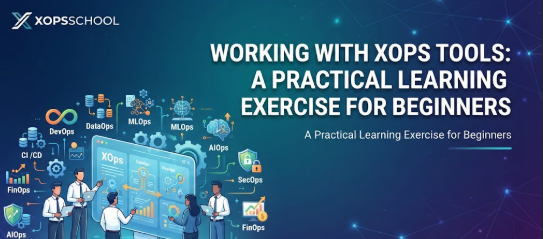
For years, technology organizations managed operational specialties like isolated walled gardens. Software teams ran DevOps, data engineers built isolated pipelines, data scientists experimented with MLOps, and systems administrators reacted to alerts in solitude. However, as cloud-native applications embrace real-time analytics, embedded machine learning, and dynamic infrastructure, these operational boundaries are crumbling under the weight of system complexity. Modern engineering demands a connective tissue that synchronizes code delivery, data quality, model governance, security, and cloud expenditure.
This is where XOps redefines the landscape—not as another proprietary software product, but as an overarching operational framework designed to unify specialized engineering practices under shared automation, continuous integration, and observability protocols. Understanding how these disciplines intersect is quickly becoming essential for technical professionals, and educational hubs like XOpsSchool provide the structured, cross-disciplinary resources needed to navigate and master this connected operational ecosystem.
What is XOps?
The term XOps represents an overarching framework where the “X” acts as a variable for various technical operational disciplines. It is not a single software application, vendor product, or specialized tool. Instead, XOps is a holistic approach to managing modern IT infrastructure, software delivery, data processing, machine learning lifecycle management, and artificial intelligence integration under a shared set of principles.
At its core, XOps applies proven engineering principles—such as continuous delivery, automation, monitoring, collaboration, and iterative improvement—across all domains of technology operations. Historically, software developers worked separately from systems administrators, data engineers built pipelines in isolation from cloud infrastructure engineers, and data scientists deployed machine learning models without standardized operational oversight. XOps brings these practices together, providing a common operational mindset that emphasizes consistency, scalability, and feedback loops across the technology organization.
By connecting these operational areas, organizations move away from functional silos toward an integrated ecosystem. Engineers learn to consider how code deployment impacts cloud costs, how data pipeline reliability affects machine learning model performance, and how automated security controls protect underlying infrastructure.
Why XOps Matters in Modern IT Operations
The modern cloud environment is inherently complex. Applications are rarely monolithic binaries running on dedicated physical servers; instead, they exist as cloud-native microservices running in containers, relying on managed cloud databases, real-time analytics pipelines, and dynamic AI services. Managing this level of complexity manually or through disconnected teams is inefficient.
Integrating operational disciplines matters for several primary reasons:
- Elimination of Operational Silos: Disconnected teams often face communication barriers, mismatched priorities, and conflicting tooling. A unified operational strategy establishes common goals, shared terminology, and aligned deployment workflows.
- Increased Process Automation: Automation is a foundational requirement across all operational disciplines. Automating infrastructure provisioning, build steps, data validation, model deployments, and compliance checks reduces manual error and accelerates delivery cycles.
- Improved Observability and Feedback: Modern environments generate vast volumes of metrics, logs, and trace telemetry. Combining operational practices ensures that monitoring data flows seamlessly across software, data pipelines, and intelligent operational tools.
- Standardized Governance and Security: Applying security and governance policies continuously across code repositories, cloud platforms, and data storage locations ensures compliance without slowing down engineering productivity.
- Better Cost and Resource Optimization: Operational awareness allows organizations to track cloud infrastructure utilization, data processing overhead, and compute costs accurately.
Major XOps Disciplines
To understand the scope of XOps, it is important to examine the primary operational areas that form this integrated landscape. Each discipline addresses a specific technological requirement while sharing common operational mechanisms.
DevOps
DevOps connects software development and IT operations to shorten the development lifecycle while providing continuous delivery and high software quality. Key focus areas include Version Control (Git), Continuous Integration and Continuous Deployment (CI/CD), Infrastructure as Code (IaC), containerization, and automated testing.
DataOps
DataOps applies operational rigor to data management, data engineering, and analytics. It focuses on automating data pipelines, ensuring data quality, orchestrating complex transformations, maintaining data lineage, and enabling continuous data integration and delivery.
MLOps
MLOps addresses the operational challenges of deploying, maintaining, and monitoring machine learning models in production. It bridges data science and systems engineering by managing feature stores, model training automation, model registry workflows, version control for data and hyper-parameters, and monitoring for data drift or performance decay.
AIOps
AIOps leverages artificial intelligence, machine learning, and advanced analytics to enhance IT operations. It processes large volumes of operational telemetry (logs, events, metrics) to automate root cause analysis, correlate system alerts, detect anomalies, and streamline incident management workflows.
SecOps
SecOps integrates security policies directly into engineering and operational processes. Often referred to as DevSecOps, it emphasizes automated vulnerability scanning, secret management, identity and access governance, infrastructure hardening, and continuous security compliance.
FinOps
FinOps brings financial accountability to cloud engineering. It provides framework principles for tracking cloud spend, optimizing resource utilization, implementing chargeback mechanisms, and aligning architectural decisions with organizational budgets.
Platform Engineering
Platform Engineering focuses on creating Internal Developer Platforms (IDPs). It empowers application developers by providing standardized self-service tools, automated infrastructure workflows, and simplified deployment environments.
XOps Training: Building Cross-Disciplinary Operational Competency
Structured XOps Training focuses on helping technical professionals bridge the gap between individual technical skills and unified operational execution. Rather than studying software engineering, data management, or cloud administration in isolation, cross-disciplinary training focuses on how these disciplines intersect.
A comprehensive operational training path introduces learners to foundational concepts, including container management, cloud infrastructure automation, and automated deployment pipelines, before advancing to specialized operational domains. Learners study how data pipelines feed machine learning services, how automated observability systems identify system anomalies, and how security controls are integrated into deployment steps.
By understanding these interconnections, engineers can design resilient architectures that consider performance, reliability, security, and cost early in the technology lifecycle. Broadening technical skills enables professionals to solve real-world system issues that touch multiple operational layers.
XOps Certification: Validating Multi-Domain Technical Knowledge
As organizations adopt broader operational approaches, technical professionals often look to XOps Certification learning resources to validate their conceptual understanding and operational skills. Certification-oriented learning provides a structured framework for assessing proficiency across multiple technical domains.
Preparing for technical certifications helps learners systematically cover essential topics, identify technical knowledge gaps, and verify their familiarity with standard operational patterns. Rather than focusing exclusively on a single proprietary tool, cross-disciplinary certification paths assess a candidate’s understanding of fundamental operational principles, including:
- CI/CD integration and deployment methodologies
- Infrastructure as Code and cloud environment management
- Data pipeline reliability and orchestration
- Machine learning model deployment and governance
- Observability, metrics correlation, and automated incident triage
While passing an exam validates knowledge structure and conceptual comprehension, technical professionals should pair certification study with practical hands-on application in real or simulated laboratory environments.
XOps Course: What to Look for in a Modern Curriculum
When evaluating an XOps Course, technical learners should seek out curricula that prioritize practical operational logic over surface-level tool tutorials. A high-quality learning curriculum should establish clear technical progression across foundational and advanced topics.
Key components of an effective operational curriculum include:
- Foundational Infrastructure & Automation: In-depth coverage of Linux fundamentals, networking, shell scripting, Git workflows, and cloud platform mechanics.
- Continuous Delivery Architecture: Designing scalable CI/CD pipelines, container management using Docker and Kubernetes, and automated testing strategies.
- Data and Model Operations: Techniques for orchestrating automated data ingestion pipelines, model versioning, feature management, and model monitoring.
- System Observability & Reliability: Configuring metrics collection, log aggregation, distributed tracing, alerting, and incident response frameworks.
- Security & Governance Integration: Automating policy checks, managing secrets safely, running automated code scans, and implementing role-based access control.
A well-structured course guides learners through step-by-step progressions, helping them understand how separate architectural layers fit together to form a functioning technology platform.
XOps Tutorial: Bridging Theory and Practical Hands-On Skills
A technical XOps Tutorial serves as a practical bridge between high-level operational theory and real-world implementation. While conceptual articles explain why operational convergence matters, step-by-step tutorials illustrate how configuration files, pipeline definitions, and automation scripts interact.
Engaging with hands-on tutorials helps engineers understand the mechanics of:
- Provisioning multi-tier cloud environments using Infrastructure as Code templates.
- Configuring deployment pipelines to run unit tests, security scans, and automated builds.
- Deploying containerized services to orchestration platforms with automated health checks.
- Setting up monitoring dashboards that display continuous application and data pipeline metrics.
- Automating model training scripts using event-driven pipeline triggers.
Developing hands-on competence through self-paced tutorials builds problem-solving confidence. Learners can experiment in sandboxed learning environments, observe system responses, troubleshoot deliberate configuration errors, and refine their operational skills.
XOps Tools: Categorizing the Modern Operations Stack
Operational frameworks rely on software tooling to automate tasks, collect telemetry, and orchestrate workflows. Because XOps spans multiple operational domains, XOps Tools are categorized by their function within the technology ecosystem.
Source Control and Collaboration
Central repositories store application code, configuration files, infrastructure definitions, and operational scripts. Git platform solutions enable team collaboration, code reviews, pull-request automation, and audit tracking.
Continuous Integration and Delivery (CI/CD)
CI/CD tools automate software building, testing, artifact creation, and deployment across target environments. They serve as the central execution engine for technical deployment workflows.
Containers and Orchestration
Container runtime platforms package applications alongside their dependencies to guarantee environment consistency. Container orchestration systems manage container lifecycle, scaling, networking, ingress routing, and self-healing across cluster environments.
Infrastructure Automation
Infrastructure as Code (IaC) and configuration management tools enable engineers to define cloud resources declaratively. They automate server provisioning, network topology creation, storage allocation, and parameter configuration.
Observability and Monitoring
Observability software collects, stores, and analyzes metrics, logs, and distributed traces. These tools enable real-time dashboard visualization, alerting, and telemetry correlation across application microservices and underlying infrastructure.
GitOps and Continuous Deployment
GitOps tools operationalize declarative continuous delivery by synchronizing the desired system state stored in Git with the live cluster state, automatically correcting configuration drift.
Data Operations Tools
Data pipeline orchestration and quality framework tools schedule, execute, and monitor data ingestion, transformation, and storage tasks while validating data schema and integrity.
MLOps Tools
Machine learning platform tools manage experiment tracking, model artifact registries, automated hyper-parameter tuning, model serving endpoints, and performance monitoring.
AIOps Tools
Intelligent operational tools ingest system event data, utilize machine learning models to group duplicate alerts, perform root-cause correlation, and trigger automated remediation scripts.
DevOps Training: The Foundation of Modern Software Delivery
Comprehensive DevOps Training provides the foundational framework upon which all other modern operational practices are built. Before an engineer can manage complex data workflows or AI monitoring systems, they must understand core software delivery mechanisms.
DevOps education focuses on automating the software lifecycle. Learners study version control workflows, container packaging, automated build processes, release strategies (such as blue-green or canary deployments), and infrastructure management.
By mastering DevOps basics, engineers establish a strong foundation in continuous deployment principles. This mindset—building repeatable, automated, and observable pipelines—directly applies when moving into specialized areas like DataOps or MLOps.
AIOps Training: Applying Intelligence to Operational Workflows
As technology infrastructures scale to manage thousands of microservices and dynamic cloud assets, manual log inspection and threshold-based alerting become insufficient. AIOps Training focuses on using machine learning algorithms and advanced data analysis to optimize system administration and incident management.
Training in AIOps covers key operational topics:
- Event Correlation: Filtering noise by grouping related alerts from multiple infrastructure layers into a single, contextualized incident.
- Anomaly Detection: Establishing dynamic baseline metrics for system performance and flagging unusual patterns without relying on static alert limits.
- Root Cause Analysis: Processing log entries and distributed trace topologies to identify the origin of system performance degradation.
- Predictive Analytics: Forecasting capacity shortages, storage exhaustion, or potential component failures before service degradation occurs.
- Automated Remediation: Triggering self-healing scripts and automated workflows in response to recognized system failure signatures.
Learners explore how AI tools enhance human decision-making, allowing operations teams to focus on structural improvements rather than manual troubleshooting.
MLOps Training: Operationalizing Machine Learning Lifecycles
Data science teams frequently build highly accurate machine learning models that struggle to reach production environments due to deployment and operational complexities. MLOps Training teaches engineers how to bridge the gap between experimental data science and production-grade software engineering.
Key subject areas in MLOps training include:
- Data and Model Versioning: Tracking changes across data sets, model code, hyper-parameters, and generated model artifacts.
- Automated Model Training: Designing pipelines that retrain models automatically when new data arrives or model performance drops.
- Model Deployment Strategies: Serving models through scalable REST APIs, streaming interfaces, or edge-device runtimes.
- Monitoring Drift: Tracking model accuracy over time, identifying data drift (changes in input data distributions) and concept drift (changes in target relationships).
- Governance and Reproducibility: Maintaining complete lineage records to ensure model decisions can be audited and reproduced.
Engineers trained in MLOps ensure that machine learning assets remain reliable, performant, and maintainable throughout their operational lifecycles.
DataOps Training: Ensuring Continuous and Reliable Data Delivery
Modern enterprise operations rely heavily on data streams to drive business logic, analytics dashboards, and AI applications. DataOps Training applies operational principles—such as continuous integration, automated testing, and proactive monitoring—to data engineering workflows.
A DataOps curriculum addresses core technical challenges:
- Data Pipeline Automation: Orchestrating complex Extract, Transform, Load (ETL) and Extract, Load, Transform (ELT) workflows across distributed data lakes and data warehouses.
- Automated Data Testing: Running automated checks on schema compliance, null values, numerical ranges, and data volume anomalies before data hits production systems.
- Data Observability: Tracking data lineage, freshness, volume, schema updates, and processing latency across end-to-end data pipelines.
- Environment Isolation: Managing development, staging, and production environments for data transformation code safely.
Through DataOps education, data engineers learn to build data architectures that deliver high-quality, continuous data feeds to downstream consumers reliably.
How XOps Connects DevOps, DataOps, MLOps, and AIOps
While DevOps, DataOps, MLOps, and AIOps focus on specific technical domains, they are deeply interconnected. An enterprise application might depend on a microservice written by software engineers, fed by a data pipeline built by data engineers, using a prediction model trained by data scientists, running on cloud infrastructure monitored by intelligent operations tools.
These operational practices support one another in real-world environments:
- DevOps provides the core foundation: Continuous integration and deployment mechanics deliver software, data transformation scripts, and machine learning models to cloud targets.
- DataOps guarantees data pipeline integrity: Continuous data validation feeds clean, reliable data to both business intelligence applications and machine learning training pipelines.
- MLOps manages intelligence assets: Automated pipelines train, register, evaluate, and serve models, turning raw data into actionable application intelligence.
- AIOps safeguards system health: Machine learning models analyze logs, metrics, and event streams across application services, data pipelines, and cloud resources to maintain high availability.
Connecting these domains creates a unified operational feedback loop, where software quality, data integrity, model performance, and infrastructure stability reinforce one another.
Who Can Benefit from XOpsSchool?
Understanding connected operational frameworks is useful across multiple technical roles. Educational platforms like XOpsSchool cater to diverse learning goals by organizing technical resources across interconnected domains.
1. DevOps and Cloud Engineers
Cloud and infrastructure specialists can expand their expertise beyond basic software delivery. Learning DataOps, MLOps, and FinOps concepts enables them to manage specialized data workloads, support machine learning deployments, and optimize cloud infrastructure costs.
2. Data Engineers
Data professionals can integrate software engineering discipline into data management. Studying DevOps and DataOps principles helps data engineers automate data pipeline testing, manage infrastructure declaratively, and build resilient data architectures.
3. Machine Learning Professionals
Data scientists and ML engineers can learn production software engineering standards. Gaining MLOps and cloud automation skills enables them to package, deploy, monitor, and maintain models independently in live production environments.
4. IT Operations and SRE Professionals
Systems administrators and Site Reliability Engineers (SREs) can modernise their operational practices. Learning AIOps, observability strategies, and automation frameworks allows them to reduce repetitive manual tasks, accelerate incident resolution, and improve system uptime.
5. Developers and Technical Learners
Software developers and technology students can build a broad understanding of cloud-native infrastructure. Learning cross-disciplinary operational concepts helps them write code that is optimized for deployment, observability, security, and cost efficiency.
6. Technology Teams and Organizations
Engineering groups and IT departments can adopt shared operational terminologies, architectural patterns, and automation standards across development, data, security, and operations units, improving cross-team collaboration.
Operational Disciplines and Learning Areas
| XOps Discipline | Main Focus | Common Learning Areas |
| DevOps | Continuous software delivery & infrastructure automation | CI/CD, Git, Containers, Kubernetes, Terraform |
| DataOps | Continuous data pipeline delivery & data quality management | Data orchestration, schema testing, data lineage, ETL/ELT |
| MLOps | Machine learning lifecycle & model deployment | Feature stores, model registries, drift monitoring, experiment tracking |
| AIOps | Automated IT operations & intelligent incident analysis | Event correlation, anomaly detection, log analysis, root cause automation |
| SecOps | Continuous security integration & policy enforcement | DevSecOps, secret management, container scanning, IAM governance |
| FinOps | Cloud financial management & cost optimization | Cost allocation, cloud tagging, resource right-sizing, spend visibility |
| Platform Engineering | Developer self-service & standardized infrastructure platforms | Internal Developer Platforms (IDPs), service catalogs, workflow templates |
Common Mistakes When Learning XOps
Navigating multi-disciplinary operational concepts can be challenging. Technical learners often make specific mistakes when building their skills:
- Treating XOps as a Single Tool: Assuming XOps can be mastered by purchasing or installing a single software package. It is an operational framework, not a standalone tool.
- Learning Tools Without Core Concepts: Memorizing configuration syntax for specific software tools without understanding underlying engineering principles like version control, networking, or distributed systems architecture.
- Attempting to Learn Everything Simultaneously: Trying to master DevOps, DataOps, MLOps, SecOps, and FinOps all at once. Learning should be iterative, starting from core software and infrastructure fundamentals.
- Bypassing DevOps Foundations: Skipping fundamental topics—such as Linux systems administration, Git workflows, CI/CD, and containerization—before diving into advanced MLOps or AIOps platforms.
- Focusing Exclusively on Certification: Studying solely to pass multiple-choice exams without building hands-on projects, writing automation scripts, or troubleshooting live environments.
- Neglecting Observability and Security: Building delivery pipelines without integrated logging, metrics, alerting, and automated security checks.
Learners can avoid these pitfalls by taking a structured, step-by-step approach—mastering core concepts, building hands-on projects, and systematically expanding into specialized operational areas.
Best Practices for Learning XOps
Building multi-domain operational competence requires structured, deliberate study habits. Technical professionals should adopt practical strategies to maximize learning outcomes:
- Establish Strong Fundamentals First: Build a solid foundation in Linux administration, networking basics, shell scripting, Git version control, and cloud computing principles.
- Master Core DevOps Practices: Gain hands-on confidence in creating CI/CD pipelines, containerizing services, and managing cloud resources via Infrastructure as Code.
- Emphasize Hands-On Practice: Apply theoretical knowledge by running local lab environments, building containerized applications, and setting up automated deployment pipelines.
- Focus on End-to-End Workflows: Build sample projects that connect multiple disciplines—such as deploying a containerized microservice that queries a managed data pipeline monitored by automated alerting.
- Learn System Observability: Practice configuring log aggregators, metrics dashboards, and tracing tools to understand how distributed software behaves under load.
- Document Your Implementations: Maintain clear technical notes, architecture diagrams, and Git repositories for all practice projects to reinforce learning.
Learning Objectives and Recommended Areas
| Learning Goal | Recommended XOps Area | Skills to Develop |
| Automating Application Releases | DevOps | CI/CD pipelines, container deployment, release strategies |
| Managing Server Provisioning | DevOps / Platform Engineering | Infrastructure as Code, configuration management, cloud APIs |
| Building Reliable Data Streams | DataOps | Data orchestration, automated testing, data quality checks |
| Deploying Machine Learning Models | MLOps | Model serving APIs, feature registries, drift detection |
| Automating IT Incident Analysis | AIOps | Log aggregation, metric correlation, anomaly detection |
| Creating Developer Workflows | Platform Engineering | Internal developer platforms, self-service provisioning, templates |
| Maintaining Cloud Budget Alignment | FinOps | Resource tagging, cloud cost tracking, capacity planning |
An 8-Step XOps Learning Guide
To build cross-disciplinary operational capability systematically, learners can follow this structured 8-step learning path:
Step 1: Understand What XOps Means
Study the conceptual foundations of operational convergence. Understand how DevOps, DataOps, MLOps, AIOps, SecOps, and FinOps interact within cloud ecosystems.
Step 2: Build DevOps Foundations
Master core software delivery skills: Git repository management, Linux operations, shell scripting, containerization with Docker, and automated CI/CD pipeline creation.
Step 3: Learn Cloud and Infrastructure
Gain practical experience with cloud platforms, virtual networking, identity access controls, container orchestration with Kubernetes, and Infrastructure as Code using tools like Terraform.
Step 4: Learn Observability and Reliability
Study modern monitoring principles. Learn how to collect system metrics, aggregate log files, implement distributed tracing, define Service Level Objectives (SLOs), and manage alerts.
Step 5: Explore DataOps
Understand data engineering operations. Study data pipeline scheduling, automated schema validation, continuous data integration, and data quality monitoring frameworks.
Step 6: Explore MLOps and AIOps
Study machine learning lifecycle management, model registration, automated retraining, and model serving. Explore how AI tools process system telemetry to automate incident triage.
Step 7: Learn Security, Governance and Cost Awareness
Integrate DevSecOps practices by automating vulnerability scanning, secret management, and compliance checks. Study FinOps principles to monitor and optimize cloud compute costs.
Step 8: Build an Integrated Practical Project
Synthesize your knowledge by building a unified project that combines application delivery, data pipeline orchestration, container management, observability, and security controls in a single environment.
Practical XOps Learning Approach: From Theory to Implementation
Moving from conceptual understanding to practical competence requires interactive, hands-on experimentation. Reading documentation and watching conceptual lectures provide valuable context, but working directly with tooling cements operational skills.
An effective practical learning approach includes:
- Setting Up Local Sandbox Environments: Use local virtualization, lightweight container clusters, and mock cloud APIs to experiment safely without incurring cloud charges.
- Constructing CI/CD Pipelines: Build pipelines that automatically compile code, run unit tests, build container images, perform security checks, and deploy applications to staging targets.
- Simulating System Failures: Introduce deliberate errors—such as broken database connections, misconfigured environment variables, or resource exhaustion—and use monitoring tools to diagnose and remediate the issue.
- Automating Manual Tasks: Identify repetitive administrative steps—such as environment provisioning or log rotation—and replace them with declarative scripts or automation playbooks.
- Writing Architectural Technical Notes: Document setup steps, configuration choices, and troubleshooting steps for every project you build.
Practicing real-world operational scenarios prepares engineers to handle complex technology environments confidently.
How to Choose the Right XOps Tools for Your Workflows
With hundreds of specialized software tools available, selecting the right tools for an operational stack requires careful evaluation. Technology teams and individual learners should evaluate tools based on clear technical criteria rather than market popularity:
- Architectural Compatibility: Choose tools that integrate smoothly with your existing technology stack, cloud providers, runtime environments, and programming languages.
- Community and Ecosystem Support: Select tools with active open-source communities, comprehensive documentation, maintainable plugins, and regular security updates.
- Scalability and Reliability: Verify that the tool can handle enterprise growth, high transaction volumes, distributed deployments, and multi-region architectures.
- Ease of Maintenance: Consider the operational overhead required to manage, upgrade, and secure the tool itself. Managed software-as-a-service (SaaS) options or simple declarative configurations are often preferable to complex self-hosted infrastructure.
- Security and Compliance: Ensure the tool meets organizational security standards, offering role-based access control (RBAC), audit logging, and encryption for data at rest and in transit.
- Team Skill Alignment: Choose tools that match your team’s existing skill set or provide a manageable learning curve.
Focusing on open standards, modular interfaces, and interoperability prevents vendor lock-in and keeps operational stacks flexible.
XOps Career and Skill Development
As technology organizations mature, demand grows for technical professionals who combine deep expertise in a primary domain with broad operational awareness across connected disciplines.
Expanding multi-disciplinary operational skills enhances career adaptability across several roles:
- DevOps Engineers can transition into Platform Engineers or Infrastructure Architects by mastering platform self-service patterns and developer tooling.
- Data Engineers can advance to DataOps Architects by establishing continuous delivery pipelines for large-scale data lake environments.
- Data Scientists can evolve into MLOps Engineers by acquiring expertise in container management, API deployment, and continuous model tracking.
- Systems Administrators can move into AIOps or SRE Roles by building automation capabilities, statistical telemetry processing, and intelligent incident management skills.
Building broad technical capability across automation, cloud platforms, observability, data flows, and security provides professionals with flexible career pathways across modern engineering organizations.
Using XOpsSchool as a Structured Learning Resource
Navigating the vast ecosystem of software delivery, cloud platforms, data pipelines, and intelligent monitoring can feel overwhelming. Educational platforms like XOpsSchool simplify this process by structuring cross-disciplinary knowledge into clear learning resources.
To make the most of XOpsSchool as an educational resource, consider following this systematic learning approach:
- Assess Your Baseline Technical Skills: Identify your current strengths in software development, cloud infrastructure, or data engineering.
- Review Foundational Learning Content: Use basic guides and tutorials to establish standard knowledge across version control, Linux operations, and networking fundamentals.
- Explore Specific Operational Disciplines: Focus on targeted learning paths—such as DevOps, DataOps, MLOps, or AIOps—that align directly with your immediate professional goals.
- Utilize Practical Tutorials: Work through step-by-step practical guides to understand configuration structures, pipeline logic, and tool interactions.
- Engage with Certification Revision Resources: Use structured syllabus outlines and knowledge checkpoints to systematically validate your technical understanding.
- Apply Knowledge to Hands-On Projects: Implement the operational patterns you study by building practical automation workflows in your own lab environments.
Frequently Asked Questions
What is XOps in simple terms?
XOps is an umbrella approach that connects various technical operational disciplines—such as DevOps, DataOps, MLOps, AIOps, SecOps, and FinOps—into a unified framework. It applies shared principles of automation, continuous delivery, observability, and collaboration across software, data, machine learning, security, and cloud cost management.
How is XOps different from DevOps?
DevOps focuses specifically on bridging software development and IT operations to streamline application delivery. XOps expands these continuous delivery, automation, and operational principles to include specialized technical fields like data engineering (DataOps), machine learning (MLOps), artificial intelligence operations (AIOps), security (SecOps), and cloud cost management (FinOps).
What disciplines are included in XOps?
Major disciplines under the XOps umbrella include DevOps, DataOps, MLOps, AIOps, SecOps (DevSecOps), FinOps, and Platform Engineering.
Is XOps suitable for beginners?
Yes, provided beginners start with foundational technology concepts. A new learner should master core IT fundamentals—such as Linux administration, version control (Git), basic networking, and scripting—before progressing into automated CI/CD, cloud infrastructure, and specialized operational domains like DataOps or MLOps.
What should an XOps training path include?
A balanced training path should cover core systems engineering, version control, CI/CD pipeline automation, containerization, cloud infrastructure management, data pipeline orchestration, machine learning deployment workflows, system observability, automated security controls, and cloud cost tracking.
What is the purpose of XOps certification?
Technical certifications help professionals organize their study efforts, follow a structured curriculum, test their conceptual understanding across multiple domains, and demonstrate familiarity with standardized operational patterns and tools.
What should learners look for in an XOps course?
Learners should look for courses that offer practical progression, explain architectural logic clearly, emphasize open industry standards, cover multi-disciplinary workflows, and provide hands-on exercises or project scenarios.
Which tools are commonly associated with XOps?
Common operational tools include version control systems (Git platforms), CI/CD engines (Jenkins, GitHub Actions, GitLab CI), container platforms (Docker, Kubernetes), Infrastructure as Code solutions (Terraform, Ansible), observability stacks (Prometheus, Grafana), and specialized tools for data orchestration and MLOps tracking.
How are DevOps, DataOps, MLOps, and AIOps connected?
DevOps provides the core CI/CD and infrastructure automation engine. DataOps delivers continuous, validated data pipelines that feed applications and machine learning models. MLOps automates the deployment and monitoring of those models. AIOps uses machine learning to monitor telemetry across all software, data, and infrastructure layers to automate incident triage.
How can someone start learning XOps?
Begin by establishing a strong foundation in Linux, Git, networking, and scripting. Next, study core DevOps practices like containerization and continuous integration. From there, gradually explore specialized disciplines—such as DataOps, MLOps, or AIOps—by building small, hands-on automation projects.
Conclusion
The transition toward XOps represents a fundamental evolution in how technology organizations build, deploy, and sustain modern systems. As software architectures grow more interdependent, relying on isolated operational silos creates friction, delayed releases, and uncoordinated risk. True operational resilience in today’s cloud ecosystem relies on bridging the gaps between software delivery, data reliability, machine learning management, intelligent incident monitoring, and cost governance.
Mastering this integrated landscape does not require learning every tool in existence; instead, it calls for cultivating a cross-disciplinary engineering mindset centered on continuous automation, shared governance, and deep system observability. By leveraging structured learning paths, tutorials, and practical frameworks through platforms like XOpsSchool, engineers and IT leaders can systematically expand their technical expertise—transforming fragmented workflows into a cohesive, production-ready engineering engine.
